



MILLCREEK, Utah — March is National Colorectal Cancer Awareness Month. At St. Mark’s Hospital, the team is getting the word out about screening, prevention and awareness.
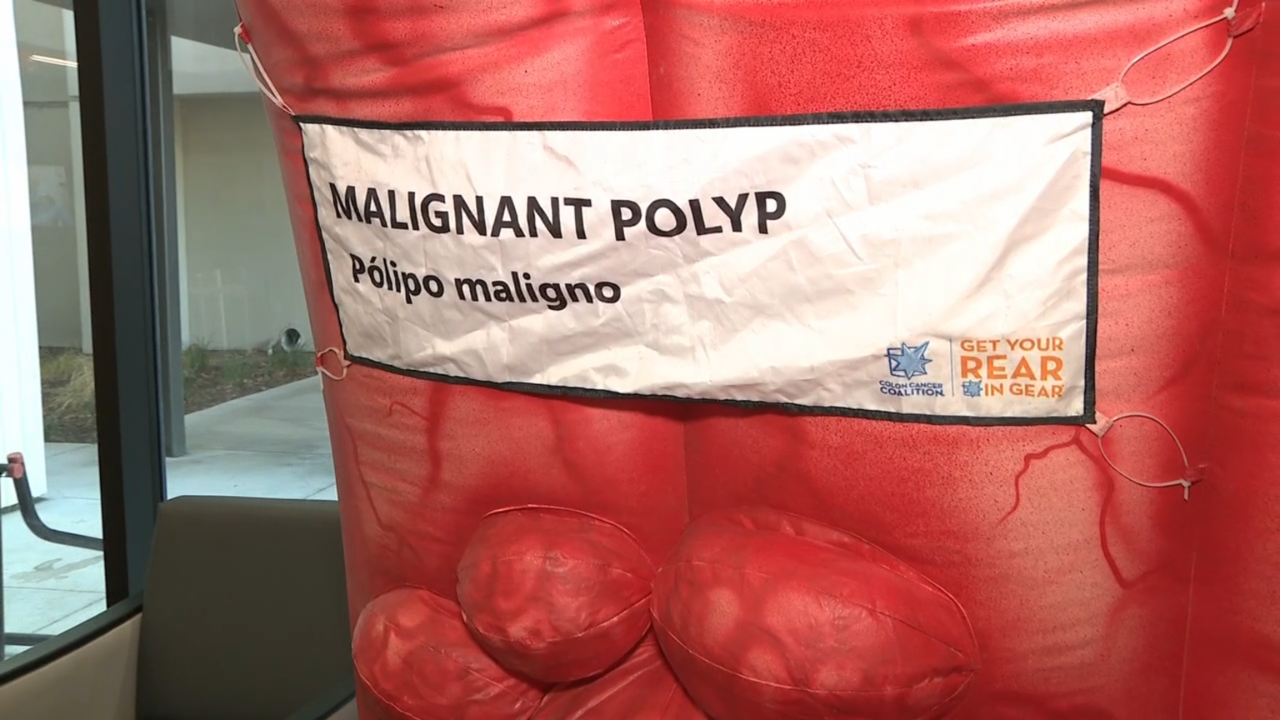
This week, they hosted an inflatable colon inside the lobby to provide more information about the disease.
Melissa Tolotti is an oncology nurse navigator at MountainStart Healthcare’s St. Mark’s Hospital. Each day, she works with patients and walks with them from the beginning of their diagnosis and throughout their treatment.
“Typically I'll get my patients because they've had a colonoscopy and unfortunately received a cancer diagnosis, but that's why we're here today is to try and prevent people being diagnosed with colon cancer,” she said.
According to the Journal of the American Medical Association, colorectal cancer is now the leading cause of cancer deaths among people younger than 50 in the U.S. Tolotti said the typical screening age is 45 now, which just changed from 50 a few years ago.
“We're wanting to catch this earlier because more and more young adults are being diagnosed with colon cancer,” she said. “It’s a very treatable disease.”
She said it’s important to talk to your primary care physician when you have symptoms, which include:
- rectal bleeding
- abdominal pain that doesn’t go away
- diarrhea or constipation
- constant feeling of fatigue
- blood in stool
- unexplained weight loss
Regular screening can provide doctors with an opportunity to find and remove colon growths called polyps before they turn in to cancer. If someone is at more risk for colorectal cancer because of a personal or family history of this disease, then more frequent and earlier screenings are necessary.
“There's over 150,000 cases that are diagnosed in the US a year and over 50,000 deaths in the US each year,” Tolotti said. “So it is important that we get our screenings early because it is preventable and it is treatable if we catch it early.”