

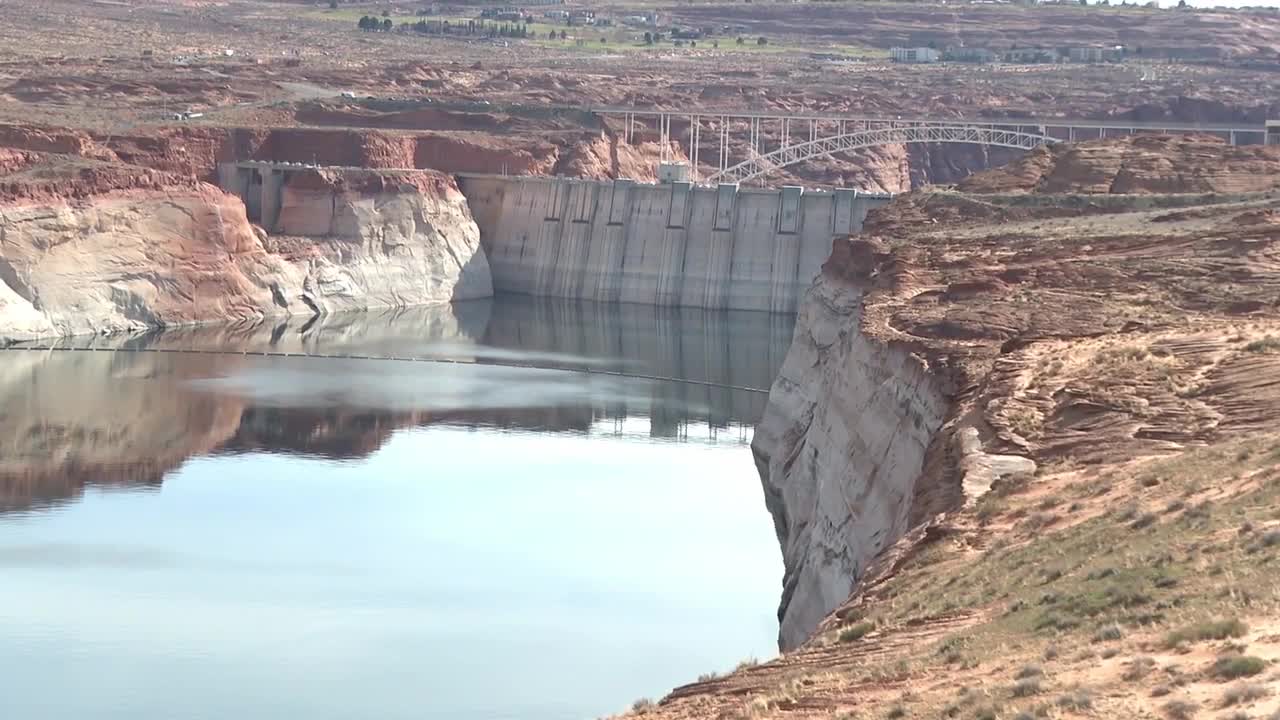


PAGE, ARIZONA — Lake Powell has dropped 36 feet in just the past year, leaving the massive reservoir at only 27% of its capacity and raising concerns about the ability of the Glen Canyon Dam to generate power.
"There was a time when this was all covered… where we were standing was above water," said Charles Weiss, a 25-year resident living near the Wahweap Marina who works at Glen Canyon Dam.
The dramatic water loss has transformed the landscape around Lake Powell. Satellite images from the past 11 years show islands appearing where none existed before, and the Wahweap Marina has been forced to move steadily eastward to stay accessible.

During a seven-state Colorado River conference in Las Vegas before the holiday, Bureau of Reclamation senior water resource program manager Carly Jerla warned that the lake's decline is happening faster than expected.
"We're always just a couple dry years away from tipping into crisis mode," Jerla said. "The trend and the declining inflow into the system, the likelihood for persistent dry conditions in the future, just indicate that more robust measures are needed."
As of Tuesday, the U.S. Geological Survey reported Lake Powell's level at 3,540 feet, representing just 27% of the reservoir's total capacity. The water has receded so dramatically that visitors can now see a distinct "bathtub ring" around the shoreline and the backside of Glen Canyon Dam that was previously hidden underwater.
The dropping water levels are creating operational challenges throughout the area.
A marina manager, who declined to speak on camera, cautioned that the perception that the lake itself is drying up is unfounded. He emphasized that the marina itself has 166 feet of water still below it.
Even so, he noted that the boat ramp has been closed since August and expressed uncertainty about whether it could reopen this summer if water levels remain this low.
The situation becomes critical at 3,490 feet, when Lake Powell loses its ability to generate hydroelectric power.
"It's pretty low. We won't be able to produce electricity if we get to that point," Weiss said. "I try not to think about it and hope for the best."