

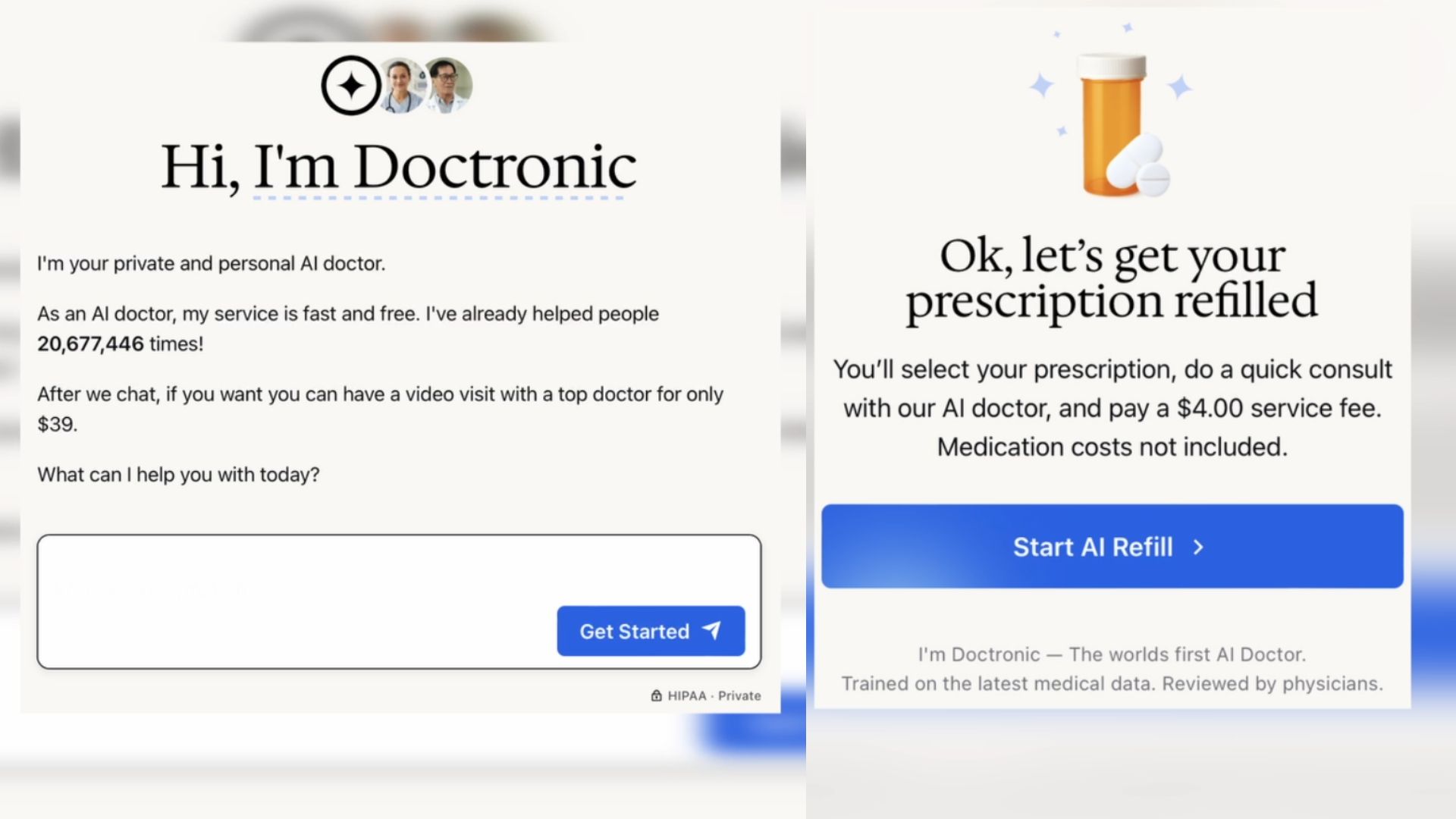


SALT LAKE CITY — A new form of artificial intelligence is coming to Utah to help you refill your prescription medications.
Utah’s Department of Commerce announced Tuesday that it’s partnering with Doctronic for a first-of-its-kind, state-approved program to allow AI to make these medical decisions.
“We believe very strongly that there’s a lot of benefit that can come from artificial intelligence to us as humans,” said Margaret Woolley Busse, the executive director of the commerce department.
Busse also oversees the newly formed Office of Artificial Intelligence Policy. She explained that her Office of AI Policy is allowed to break down regulatory barriers for companies who use this kind of technology.
In this case, Doctronic will have up to a year to offer their online services - which seek to save time and money by cutting out the need for doctors' visits.
“You come to the site, we verify that you’re in Utah," said Doctronic co-founder Dr. Adam Moskowitz. "We then go find all the medications that you’re on, and then the AI is going to ask you questions the same way a doctor would.”
Dr. Oskowitz says this will have narrow use-cases, restricted from refilling certain drugs like opioids.
Busse adds the state has required the first 250 transactions to be completed with a doctor's oversight. It will have other guardrails like an escalation protocol.
“If at any point the patient feels uncomfortable, pharmacist feels uncomfortable, or the AI determines it isn’t safe - you get escalated to a human doctor,” Dr. Moskowitz said.
John Poelman with the One Utah Health Collaborative says as Utah becomes a sort of AI sandbox, this technology could be a bright spot in creating a more affordable healthcare future.
“You got to recognize Utah’s such a rural state, so distance and convenience matters a lot in what people are able to do for their health," Poelman said.
But for those who are still unsure of the automation and advancing tech, Busse says consumers will ultimately determine the success of this service.
“We’re not promoting this product," Busse said. "We’re simply saying we think that - given the risks and the opportunity and the way we can mitigate those risks - that we’re comfortable giving them this small amount of regulatory relief.”
Officials say this temporary partnership could be extended if it does succeed, with the option available to renew the program for another year.