

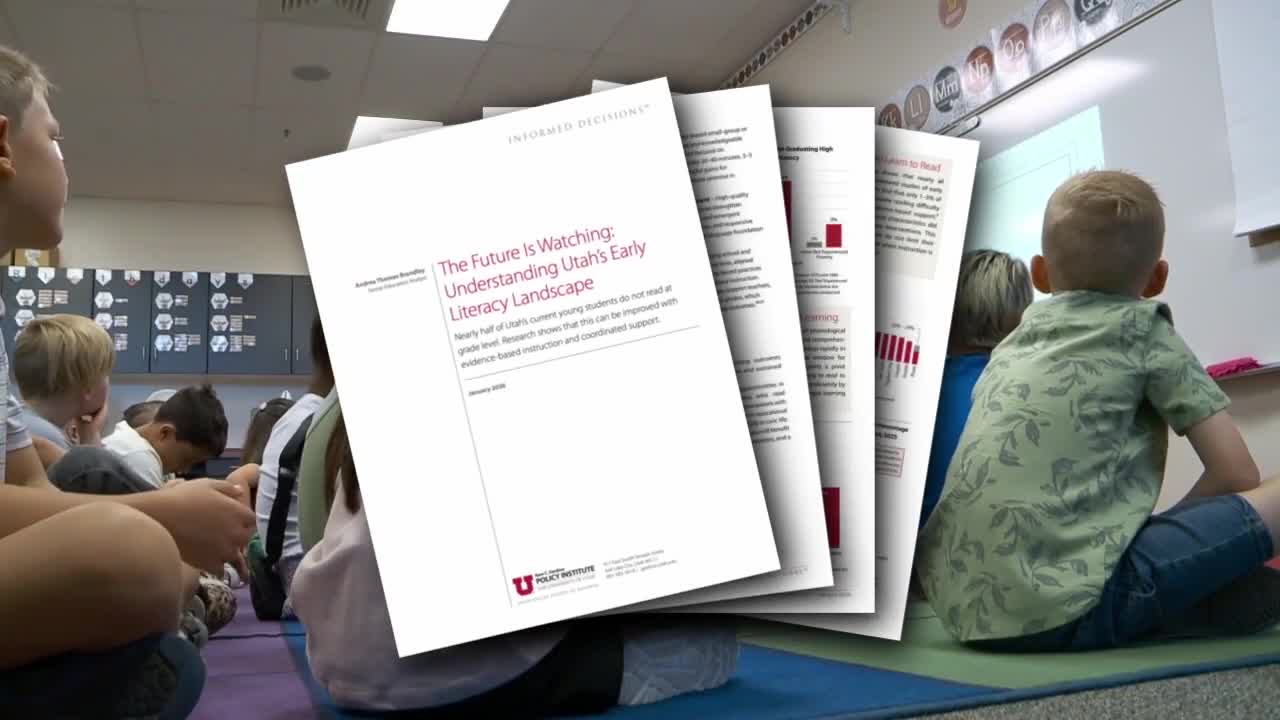


ST. GEORGE, Utah — In the hours after a report was released sharing how Utah's younger students are struggling to read, we spoke with people in the southern part of the state to find out what's being done to turn the dismal numbers around.
"I immediately want to jump in and say, 'Alright, what can we do to help these kids?' That's the first thing I want to do," shared Ashley Peterson, a literacy and Title I specialist with the Iron County School District.
The report from the Kem C. Gardner Policy Institute at the University of Utah showed 17 districts in the state have failed to have more than half their K-3 students reach reading proficiency. Washington and Iron Counties were not among the 17, falling in the middle among districts in the state.
Those who lead elementary literacy efforts at southwest Utah schools say it’s not as much about what they can change as staying on a pace of improvement. That means more time for students and more intensive literacy support.
"Recently, we’ve switched up our interventions a little bit," explained Peterson. "And within the last couple of years, by switching that up, we have seen huge gains with our students in the skills that they have been struggling with."
Nearly half of Utah's young students unable to read at grade level, report shows:
Kathy Hall is the literacy coordinator for Washington County, and she doesn’t just wear reading on the sleeve of the Book Lover sweater she wore Monday. She shared how early intervention with specialized reading specialists and parent involvement is key.
"All of our K–3 teachers have been trained in the science of reading… phonemic awareness, phonics, comprehension, vocabulary, writing," Hall said. "We intervene early… kids leave kindergarten as readers and writers and love school."
The specialists in both counties said not one demographic has been immune to reading difficulties, and that the pandemic and social media shouldn’t get in the way of teachers and parents. However, they added that a bill passed by the Utah State Legislature that mandated early literacy benchmarks came at the same time funding was reduced.
"I would love to have back the funding that we had for our early literacy. That was really sad when they took that away," said Peterson.
"More coaching could happen in the classrooms [with a return of funding]," Hall explained. "More support with our reading interventionists. Wow, if we could have maybe one for the primary grades and one for the upper grades. That would be my dream."