

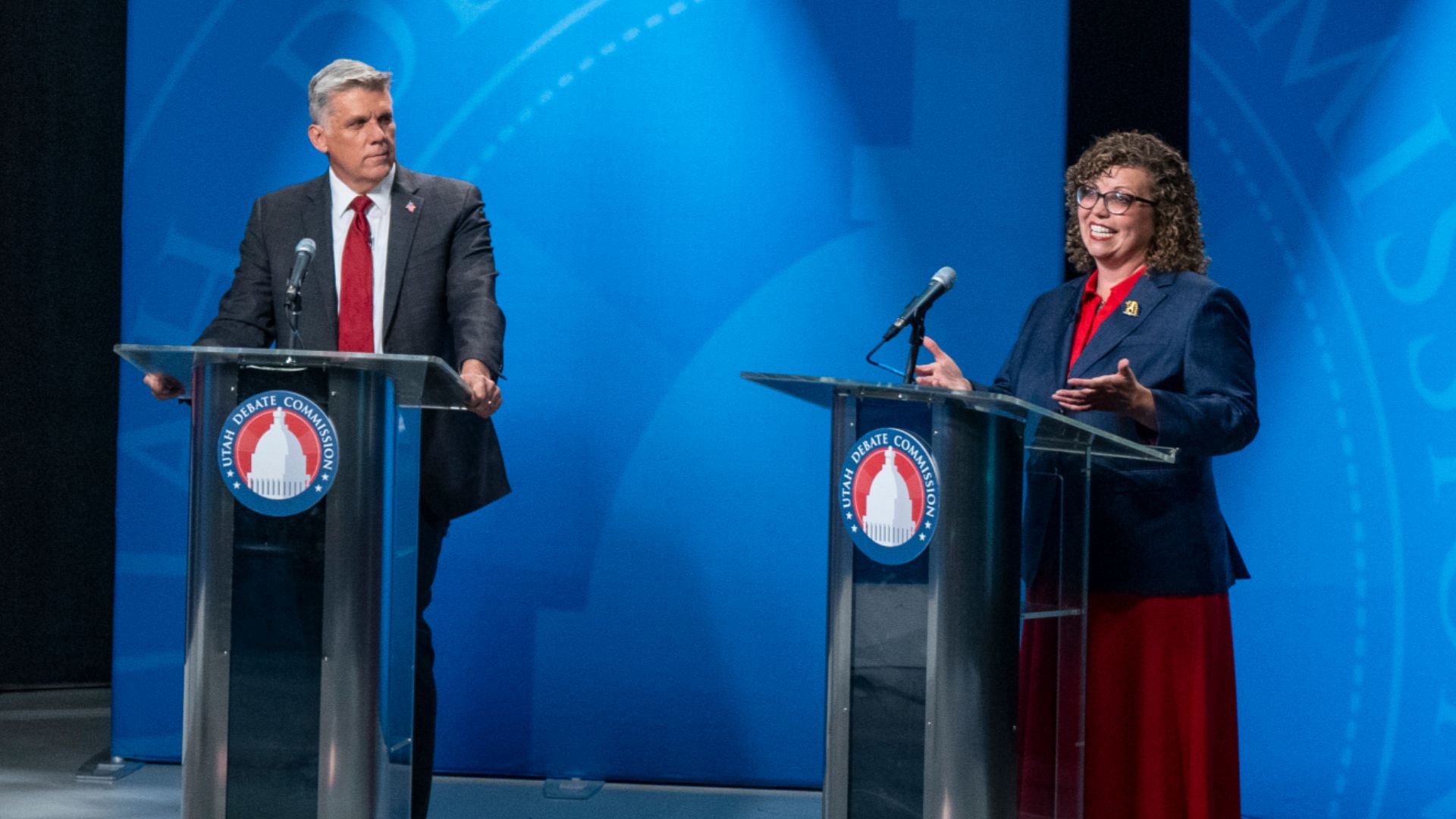


SALT LAKE CITY — The two candidates for the Republican nomination for Utah's newly created 3rd Congressional District sought to distinguish themselves from one another in their only statewide televised debate on Monday.
Incumbent Congresswoman Celeste Maloy debated challenger Phil Lyman on issues ranging from data centers to affordability. On the Box Elder County data center project — which is not in their district — Maloy said it was clear there was not public support for it.
"I support building data centers in Utah when the people of Utah support them, and right now I don't know that we have that in Box Elder County," Maloy said. "So, if the people who want to build the data center can answer the questions and bring the public along, then yes."
Lyman declared himself a "fan of Kevin O'Leary," adding: "I'm a fan of data. I'm a fan of computers. I'm a fan of technology. I believe in that. But as far as the one in Box Elder County, until they're transparent about it, I'm opposed to it."
Lyman and Maloy expressed some policy disagreements over the Colorado River, which runs through the entirety of the district they are seeking to represent. Lyman was critical of the state's handling of the river.
"Utah has been behind the curve on that," he said. "Colorado's way out in front of us with their attorneys and with their policies to try to take the water that is coming through the Colorado River, and we've made guarantees to provide wet water to these communities when we don't have it."
Maloy said she had already been working on a plan in Congress.
"I would like to see Congress helping the states make plans for water stability for the next 100 years, and I think that's going to require infrastructure and some thinking outside of the box and looking at large solutions that we just haven't considered yet," she said.
WATCH: Utah's negotiator on Colorado River says feds may make short-term decision for states
On another hot-button issue facing rural Utah, both candidates said they supported land transfers from the federal government — but disagreed on who gets it. Maloy said she supports "orphan parcel" transfers and others surrounding cities or already developed land.
"I had a proposal last year to transfer some land that local governments need for infrastructure. The thing that always comes up if we talk about transfer is the national parks, and I would oppose transferring the national parks. I think everybody opposes that, but we can do a better job of managing them for the locals," she said.
Lyman said he would not support transferring federal lands to the state of Utah.
"I do not support transferring ownership of federal land to the state because if the state has jurisdiction and ownership, I've seen what they will do with their state land," he said. "I've watched the cronyism and the pay-to-play and the picking winners and losers, and I do not trust the state of Utah in this situation to be in charge of divvying up the public land if they were to receive that from the federal government."

Politics
Upsets, incumbents facing primaries and more: Utah's GOP and Dem conventions
On affordability, Lyman argued that the tax cuts implemented were not enough, while Maloy defended what was passed. That appears to be the key distinction between the two Republican candidates — Maloy is running on her record, seeking her second full-term in Congress.
"I'm just getting started on the issues I ran to address. I want to keep fixing problems for Utahns," she told reporters following the debate.
Lyman was critical of her record in his meetings with potential voters.
"Do you realize the stakes are very, very high on these things and the person we elect is going to affect things moving forward?" he said.
Watch the full debate below: