

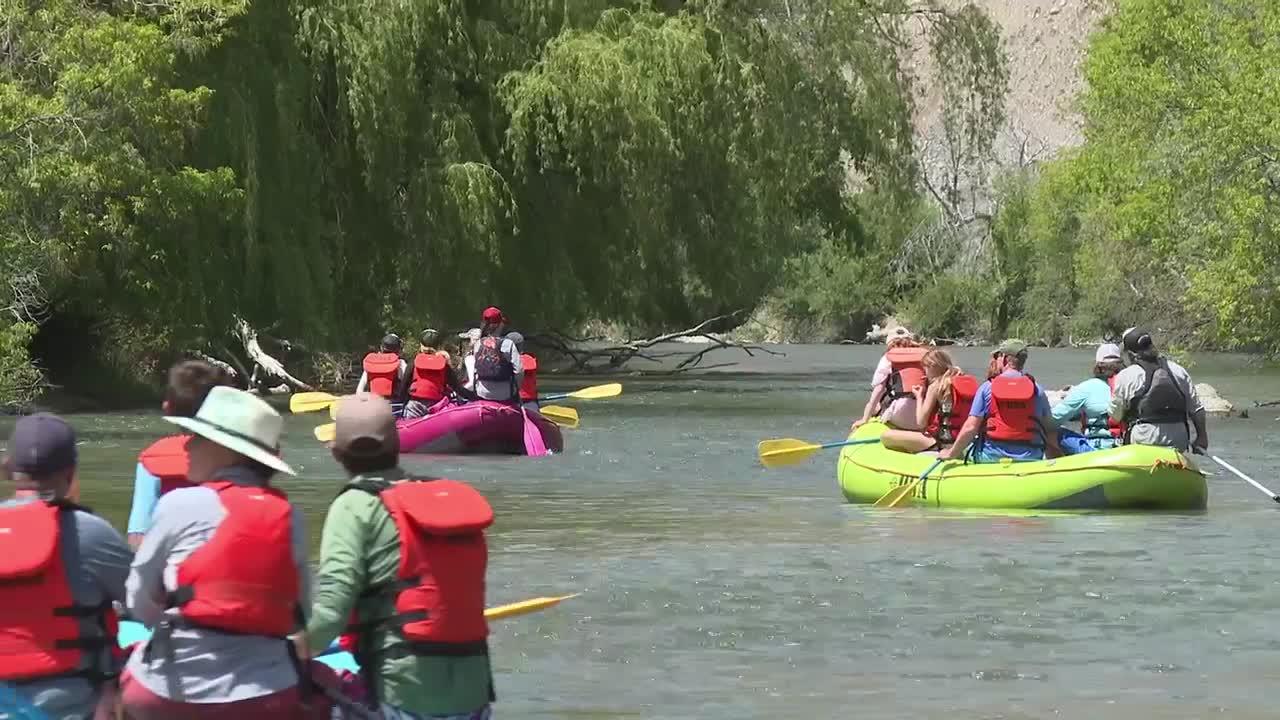


MORGAN COUNTY, Utah — Bridget Matley and her friends, Maisie Bladt and Nessa Richardson, took on the Weber River from start to finish on Sunday. They are visiting Utah for Memorial Day weekend and wanted to take on the challenge of white-water rafting.
“I’ve always wanted to white-water raft… It seems fun,” Matley said.
"I've done it a couple times, but it wasn't that fun before, because it was like all easy stuff, and I wanted to do something harder,” Bladt added.
Little did they know, it is one of the most challenging times to do this.
“We think it's going to be a low water year,” said Dawna Zukirmi, owner of Destination Sports. “It's a little more challenging to get through. There's a lot more rocks exposed. You really have to pivot to avoid them.”
It seemed Matley and her boat agreed with that.
“We hit a rock — it was so scary. We went backwards, and we were going on the biggest rapids ever, and it was so scary, but so fun,” Bladt said.
The state of Utah is already facing drought concerns due to the lack of snowfall this past winter, and while Zukirmi feels the water levels are okay right now, they’re preparing for the worst.
“We have our backup plan. If we can't get rafts through, we can offer guests kayaking trips, and when we run out of water, we might be asking people if they'd like to go for a hike,” she said.
Zukirmi said the last time they had to cut rafting short was back in 2021, and it doesn’t help that they already had a slow winter season.
“People come here for the snow and look out their hotel window and are not inspired to go out snowshoeing because they don't see any snow,” she said. "I expect it's going to be a shorter season. Most likely will end at the end of July or middle of August.”
While Zukirmi added that there are a lot of changes she hopes to see for water conservation in Utah, she hopes those watching at home will do their part in these desperate times.
“If people conserve their water and follow the recommendations for how many times a week they should water instead of watering every day, we might be able to have water through the summer,” she said.