



BENJAMIN, Utah — Gov. Spencer Cox's state of emergency declaration over state drought concerns came a week after a similar order for the crop loss that many farmers faced due to late-season freezes in April.
But this year's record-breaking winter warmth and dry skies have combined in an unwanted way, and among the first to feel the trickle-down effects have been Utah’s farmers.
“April 15, we started filling the canals — and we usually start about one month later,” said Marty Larson, who heads the Strawberry-High Line Canal Company.
Larson, who is a former farmer, said 85 percent of the company's roughly 1,700 customers are agricultural.
“Their whole livelihood depends on this water,” he said.
Farmers hopeful after Gov. Cox's emergency declaration:
The company waited as long as it could to feed the canals, because, as Larson said, if you “take it too early, you don’t have enough at the end [of the season].”
For the first time, Strawberry-High Line started its season by dipping straight into Strawberry Reservoir. Larson explained how spring runoff can usually fill the canals at first, but the high-elevation snowpack simply wasn’t there to support it this year.
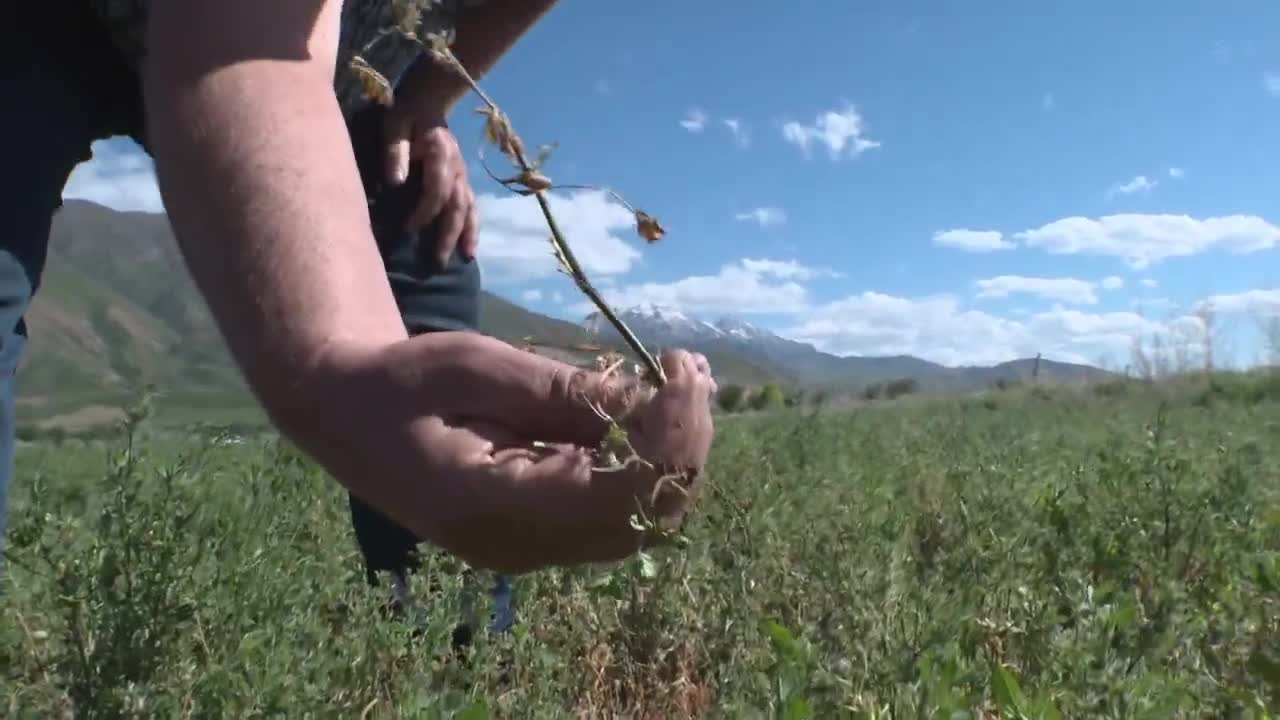
Like many fruit trees, farmers' alfalfa fields have also been stunned by multiple frosts that have rolled through.
“About a week from now, we would generally be cutting hay,” said Larson, pointing to brown, wilting leaves that weren’t much taller than his ankles.
Farmers must now wait a few more weeks before their first, and most meaningful, harvest of the season can take place.
The governor's declaration will offer the farming community loans and financial assistance through the remainder of the year. Those in the region are fortunate that Strawberry Reservoir is near full, and will help locals withstand the worst of the drought.
“So this first year, we can weather it,” said Larson. “But next year, we will have to worry about this.”