

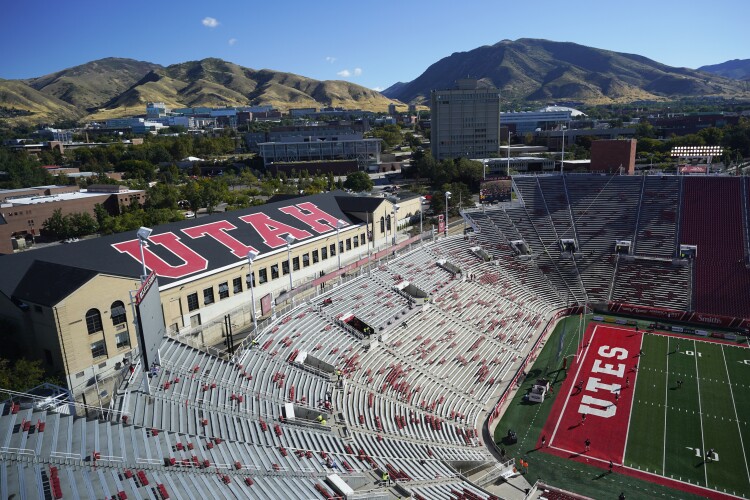

SALT LAKE CITY — The University of Utah is heading into a new era of collegiate athletics, with the school announcing it has finalized a deal to partner with a private equity firm.
The deal with Otro Capital to form Crimson Brand Partners is a first, not just for Utah, but for any college athletics department, as costs to compete and win on the field continue to rise.
Now finalized, the deal is reportedly expected to shore up the university's athletic program with a $500 million investment.
According to the school, the partnership will "modernize" Utah's athletic department and its 19 programs.
As a minority owner in Crimson Brand Partners, Otro Capital will oversee events at University of Utah stadiums and arenas, as well as branding, licensing, ticketing and sponsorships, while the school maintains control of student-athlete support, coaching, recruiting and scheduling.
“This new company puts the University of Utah at the forefront of developing creative and strategic solutions to the financial challenges facing college athletics programs across the country,” said University of Utah President Taylor Randall.
Utah Athletics Director Mark Harlan will chair the board of Crimson Brand Partners.
Since the partnership with a private equity firm was first announced, critics have accused the school of "selling its soul," claiming recent layoffs were a product of the dealmaking.
"This is the problem with inviting the private equity wolf through the door: No matter what moves are made, it’s seen through the lens of green and greed," wrote USA Today columnist Matt Hayes.
Otro Capital will begin its operations within the university's athletics department on July 1.
David Berri, professor of economics at Southern Utah University, said college sports teams typically need to raise money to pay their athletes, with a larger portion of the budget allotted to paying for the coach.
He feels a solution is allocating the money better, rather than deals like this.
“Private equity is going to focus on the explicit revenues and the explicit costs,” Berri said. "That leads us to wonder, okay, 'are you going to still be funding women's gymnastics and women's basketball and women's softball the same way that you were before?' Because they're not generating the same explicit revenue that the football team generates.”
University of Utah athletic director Mark Harlan, however, felt differently during a briefing Friday morning.
“There's more risks of not doing anything based on the climate that that we're in and the rising costs for you know player compensation and operation,” he said. "We're comfortable that are our risks are covered.”
Harlan added that there are some details regarding an exit plan, but he could not go into detail at this time. He said they hopefully won’t have to worry about it until years down the road.
