

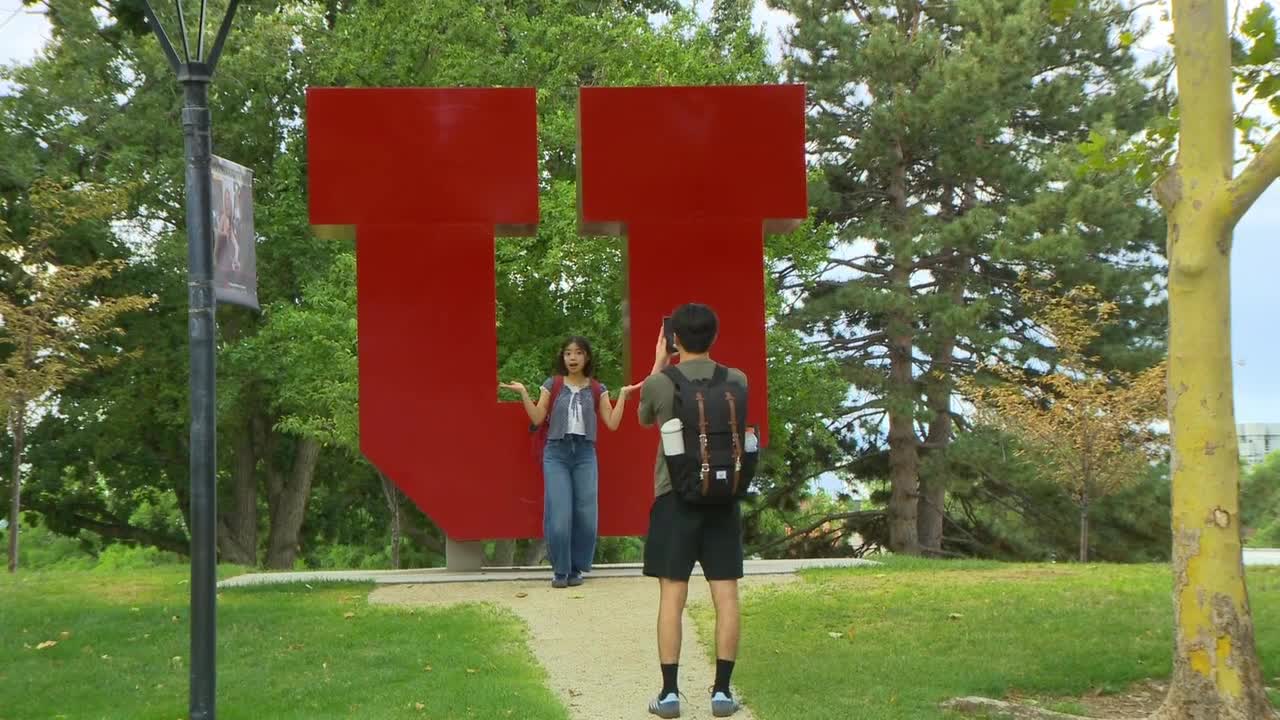


SALT LAKE CITY — Students are back on campus at the University of Utah.
Eduardo Peralta is a freshman and excited for the adventure ahead. He’s majoring in biology and hopes to become a pediatrician.
“I was actually pretty nervous I couldn’t sleep last night,” he said.
But with the new school year and excitement, there are some other emotions that come too — like loneliness, anxiety and homesickness. According to a Healthy Minds study, more than 37% of college students in 2025 said they felt so depressed it was difficult to function. But the same study shows that there’s a decline in depression and anxiety over the last three years.
That’s where the university’s Mental Health First Responders program can come in. For students living on campus and experiencing a crisis, especially after hours, they’re here to help. Dr. Torrance Wimbish leads the program and said students can come to the office or give them a call.
“I always want students to know that it’s okay to ask for help,” he said.
They’re available seven days a week from 4 p.m. to 2 a.m. The team connects students with long-term counseling and other resources available on campus.
“Part of our goal is to stabilize them and then connect them to resources on campus,” Wimbish said. “We have tons of no-cost resources for students.”
He said students can reach out to the counseling office, the Dean of Students office, or the Center for Campus Wellness. Even off campus, there’s support like Safe UT, the 988 hotline and the mobile crisis outreach team.
For students like Laura Prince Erwin, the resources help college seem less intimidating.
“They’re all really good resources and they’re available to us, so it’s like, why not?” she said.
More information about the MH1 team can be found here.