

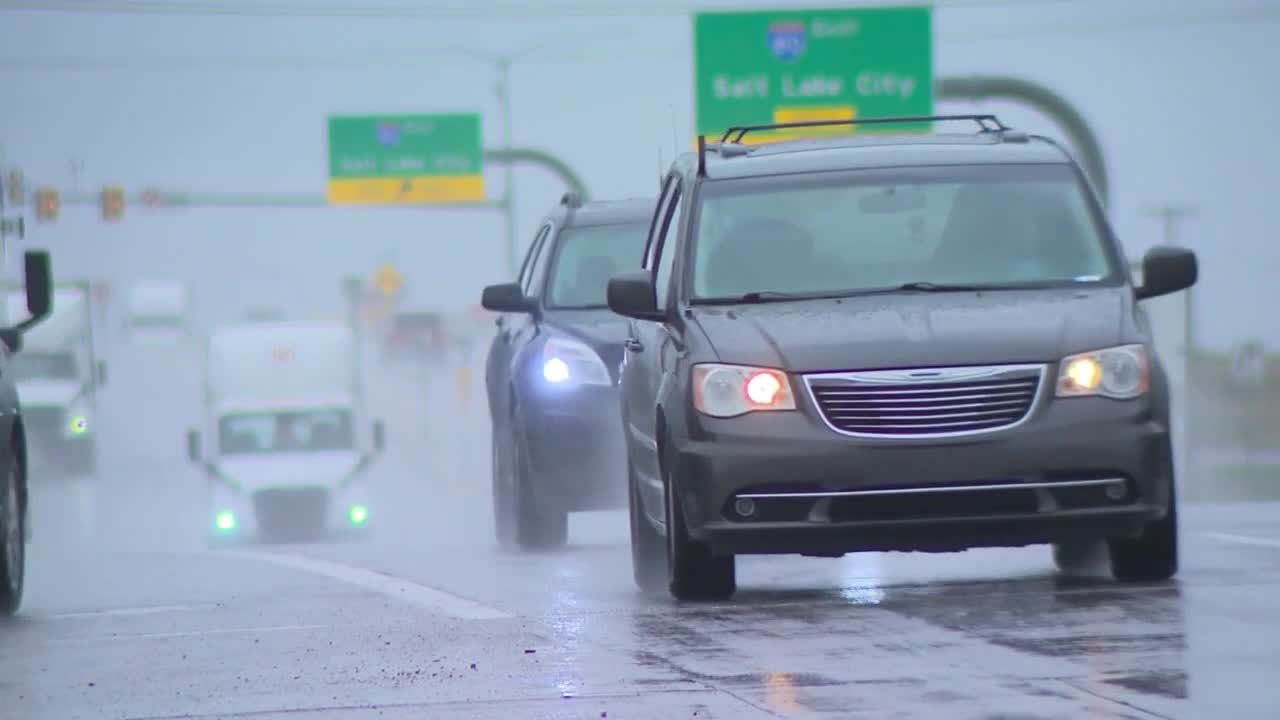


SALT LAKE CITY — April is Distracted Driving Awareness Month, and safety experts are highlighting a major roadway distraction that is often out of a driver's control: blinding headlights.
A recent AAA survey found six in 10 drivers say glare is a major issue after dark, with three-quarters of those believing it has worsened over the last decade.
If car headlights seem brighter in recent years, experts say you are not wrong in making that assumption. "The newer lights, they do have more LED and that blue light is definitely, um, a bigger cause of glare than some of the older lights," Nikisha Reddy said.
Reddy is an assistant professor of ophthalmology at the Moran Eye Institute. "It's something that we all run into every day," Reddy said.
The intense glare can force drivers to turn away the rearview mirrors they use to check their surroundings just to see in front of them. At night, pupils dilate to let in more light, which exacerbates the impact of modern headlights.
"When the pupil is dilated, you want it to be because you want more light to come into your eye," Reddy said. "But in situations like this, that excess light, specifically from those LED more blue-toned light causes a definite, more distinct issue with contrast and just that immediate, almost blinding sensation when the lights come towards you, which you don't really experience during the daytime."
Taking your eyes off the road to avoid the glare can create a dangerous situation. "Even milliseconds of needing to look away can be very harmful when we're driving," Reddy said.
Utah Highway Patrol Public Information Officer Lieutenant Cameron Roden shared strategies for drivers navigating the glare.
"When you're driving, those few seconds can be really precious," Roden said. "So there are some tips that people can do, especially if a car's coming at you with bright headlights, you know, looking down and to the left, kind of looking for that fog line to make sure you're staying inside your lane."
While Roden suggested looking to the left, the solid white fog line is typically located on the right side of the road.
Roden advised drivers not to rely on automatic dimmers. He also recommended avoiding following the car in front of you too closely and ensuring your headlights are no higher than the federal limit of 54 inches from the ground. "If people are flashing you thinking that your high beams are on and they're not, you may, you may want to go into a shop and see what they can do to help you readjust those, aim them down a little bit so that they're not pointing directly at other traffic," Roden said.
For drivers struggling to see through the bright lights, Reddy suggested a few vision and vehicle maintenance tips. "Making sure your prescription is up to date can be super helpful," Reddy said. "There are some anti-reflective coatings that can help with that."
Keeping the vehicle's glass clear can also reduce glare.
"Some people feel like a yellow filter on the glasses can be helpful," Reddy said. "Um, other things to think about, you know, making sure your windshield inside and out is very clean, um, that can contribute to, um, improving some of our symptoms too."
This story was reported on-air by a journalist and has been converted to this platform with the assistance of AI. Our editorial team verifies all reporting on all platforms for fairness and accuracy.
