

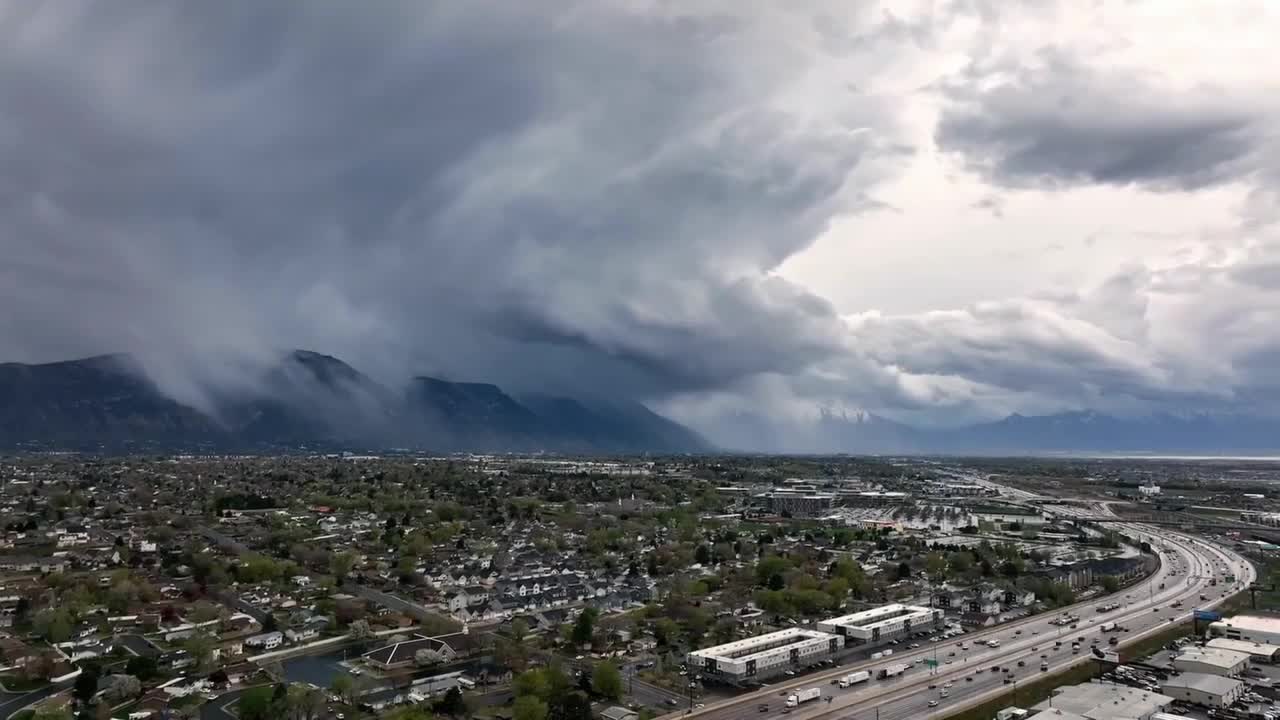


SALT LAKE CITY — A major water agency in Arizona has voted to pull funding from a cloud seeding program involving Upper Basin states like Utah.
The Central Arizona Project voted at its board meeting earlier this month to stop financially supporting future cloud seeding efforts upstream in the Colorado River system.
It appears to be the latest squabble between the states over who gets what out of the Colorado River. The water that runs through seven states supplies water to more than 40 million people. Lately, there is more demand than there is supply. Because the states cannot come to agreement over how to manage it, the U.S. Bureau of Reclamation has stepped in to oversee things and instituted cuts — primarily aimed at the Lower Basin states of Arizona, Nevada and California.
The Upper Basin states of Utah, Wyoming, Colorado and New Mexico have been prodded to do more conservation.
Arizona and Nevada have sued the federal government over the management plan.
During the Central Arizona Project board meeting, some members questioned what they were getting out of cloud seeding in the Upper Basin.
"It seems to be we're paying for a benefit in the Upper Basin with our partners to assist them," said CAP board member Alexandra Arboleda. "And they have worked with us in the past to work on programs in the Lower Basin. So I appreciate that collaboration. But It's hard to see how this is really going to help our customers, especially in the environment that we're working in right now."
The Central Arizona Project's contribution was roughly $500,000 per season, said Jonathan Jennings, a meteorologist with Utah's Division of Water Resources, which runs the world's largest remote-controlled cloud seeding program, which includes a network of drones that deliver silver iodide in storms to squeeze a little more precipitation out of a storm. He said it was unfortunate that Arizona is pulling out, adding the cloud seeding program was showing signs of success.
"This is something that we were proud of for the past 18 years, that there was this one project we can get along on and unfortunately it’s something we can’t say anymore," Jennings told FOX 13 News on Thursday. "I think with better transparency, data and reporting, we can get them back on in the coming years."
This article is published through the Colorado River Collaborative, a solutions journalism initiative supported by the Janet Quinney Lawson Institute for Land, Water, and Air at Utah State University. See all of our stories about how Utahns are impacted by the Colorado River at greatsaltlakenews.org/coloradoriver