



SALT LAKE CITY — Some of the state's most powerful and influential people huddled around tables in a conference room on Utah's Capitol Hill for a "war games" exercise over the Colorado River.
"I think there’s a lot of real-world implications," Grand County Commissioner Brian Martinez told FOX 13 News following the activity.
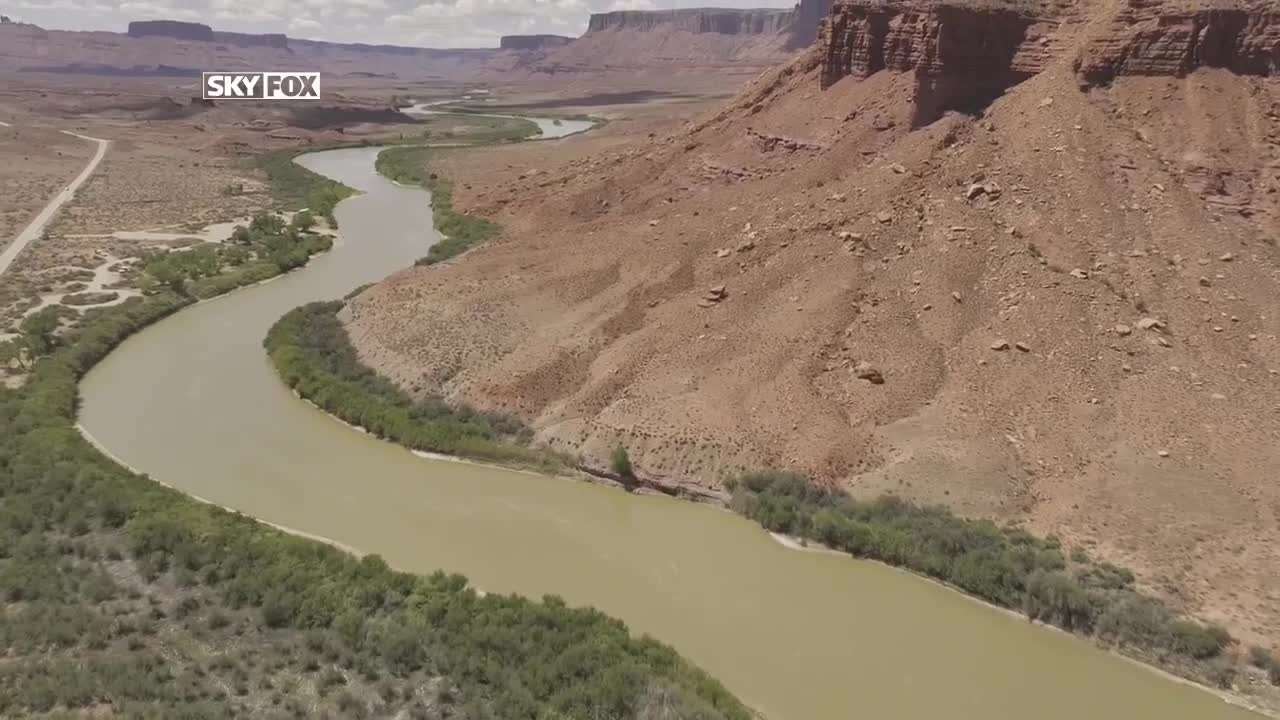
The Colorado River supplies water to more than 40 million across the American West. There is more demand than there is supply and some studies are warning the entire system is headed for a crash. The states along the river have been unable to reach an agreement to manage it, so the U.S. Department of Interior is running things for now. They've ordered water released from Flaming Gorge to prop up Lake Powell, cuts in the amount of water allocated to some states, demanded more conservation from others and some of their decisions have sparked a lawsuit.
Thursday's tabletop exercise put political leaders, experts, advocates and others in a room for hours, working through scenarios for getting more water into the Colorado River Basin in Utah. While the Colorado River's issues are multi-state, Thursday's exercise kept it focused on Utah.
"There’s not enough water and so how are we going to deal with the future and less water in the river?" said Zach Renstrom, the general manager of the Washington County Water Conservancy District, which serves communities that rely on Colorado River system water.
The war games exercise was organized by Utah State University's Center for Anticipatory Intelligence and the Institute for Land, Water & Air.
"Lots of things that are already being talked about and some of them have powerful interest groups behind them and some of them have powerful detractors behind them," said Jeannie Johnson, the director of USU's Center for Anticipatory Intelligence. "And because these conversations are so politically charged, it’s often really difficult to have the conversation at all."
War games are typically done in national security scenarios. Anna McEntire, the director of USU's Janet Quinney Lawson Institute for Land, Water & Air, said the Colorado River certainly could be considered that.
"It’s still a national security issue and so it was a really interesting opportunity," she said.
Reporters were not allowed to listen in on Thursday's event, which invoked the "Chatham House Rule," where conversations and opinions expressed are unattributed to specific people. A FOX 13 News photographer was allowed to film part of the event. Participants agreed to be interviewed about it after the exercise had concluded.
Rep. Scott Chew, R-Jensen, who heads the Colorado River Caucus in the Utah State Legislature, said they were all given scenarios to work through.
"We had curves thrown at us, different scenarios and it was a good thought process," he said. "Frankly, I’m glad I had an opportunity to be a part of it."
Congresswoman Celeste Maloy, whose congressional district includes the Colorado River, said the war games exercise considered a whole gamut of ideas like piping water into Utah, desalination exchanges with other states, expanded conservation measures and water re-use. She said it can have real-world policy implications.
"For me? As someone who is going to have to be voting on these issues? It was really good to hear from the different stakeholder groups," she told FOX 13 News. "What they’re saying, where they’re willing to compromise, where they’re not willing to compromise."
The participants were prodded to engage with others and hear other perspectives.
"Another thing that was really great to see was a lot of folks supporting ideas that weren’t theirs," said Commissioner Martinez. "And I really think that’s one of the things that’s going to have to happen."
Johnson said the event was designed to have people work through potential real-world scenarios and consider the longer-term impacts of their decisions. It's part of the work that the Center for Anticipatory Intelligence regularly does.
"Therefore when the crisis actually hits? They have far more agility and speed in making decisions," she said.
They also made connections with people across different sectors impacted by the Colorado River's decline.
"Do I think it’s going to solve all the problems? No," said Spencer Gibbons, the CEO of the Utah Farm Bureau. "But I do think there are people I haven’t connected with that are here in the room that I did today, and that adds value."
Jordan Nielson, the CEO of Great Salt Lake Rising, said it was good to have "all of the brains in the room working together."
"It’s a bunch of people who are always trying to solve problems," he said. "We don’t always do it together."
Congressman Blake Moore told FOX 13 News the war games event has already prompted him to do something.
"It already forced me to have a conversation with one of my California colleagues in the House of Representatives," he said. "To talk to them. I made a a call today, 'Have we really talked about this?'"
This article is published through the Colorado River Collaborative, a solutions journalism initiative supported by the Janet Quinney Lawson Institute for Land, Water, and Air at Utah State University. See all of our stories about how Utahns are impacted by the Colorado River at greatsaltlakenews.org/coloradoriver