



SALT LAKE CITY, Utah — Utah Lt. Gov. Deidre Henderson posted an update on Threads Sunday about a suspicious letter headed to her office that was intercepted by a postal inspector.
"Last week, state election officials around the country began receiving envelopes containing suspicious white powder and threatening letters. Today, our local postal inspector was able to intercept ours and hand it off to the FBI before it could be delivered to my office," the post read. "We are grateful for his diligence and service! Also, nothing is going to disrupt the midterm election. We won’t let it happen."
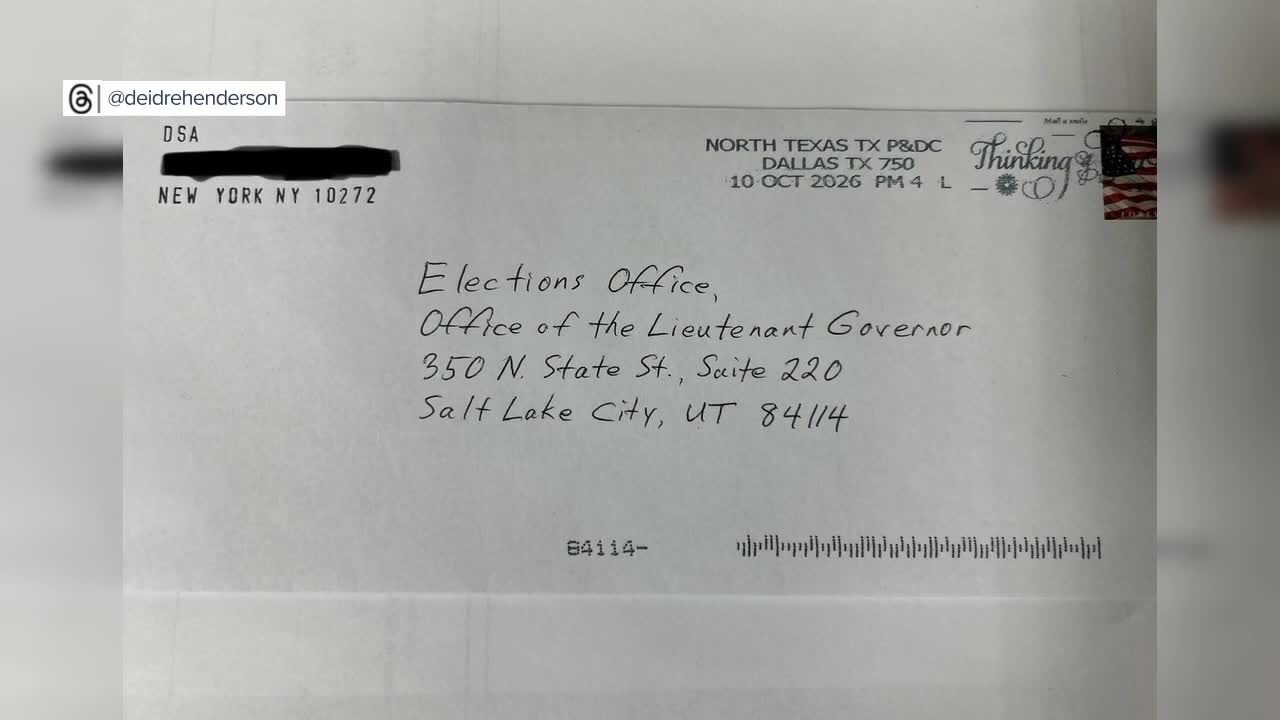
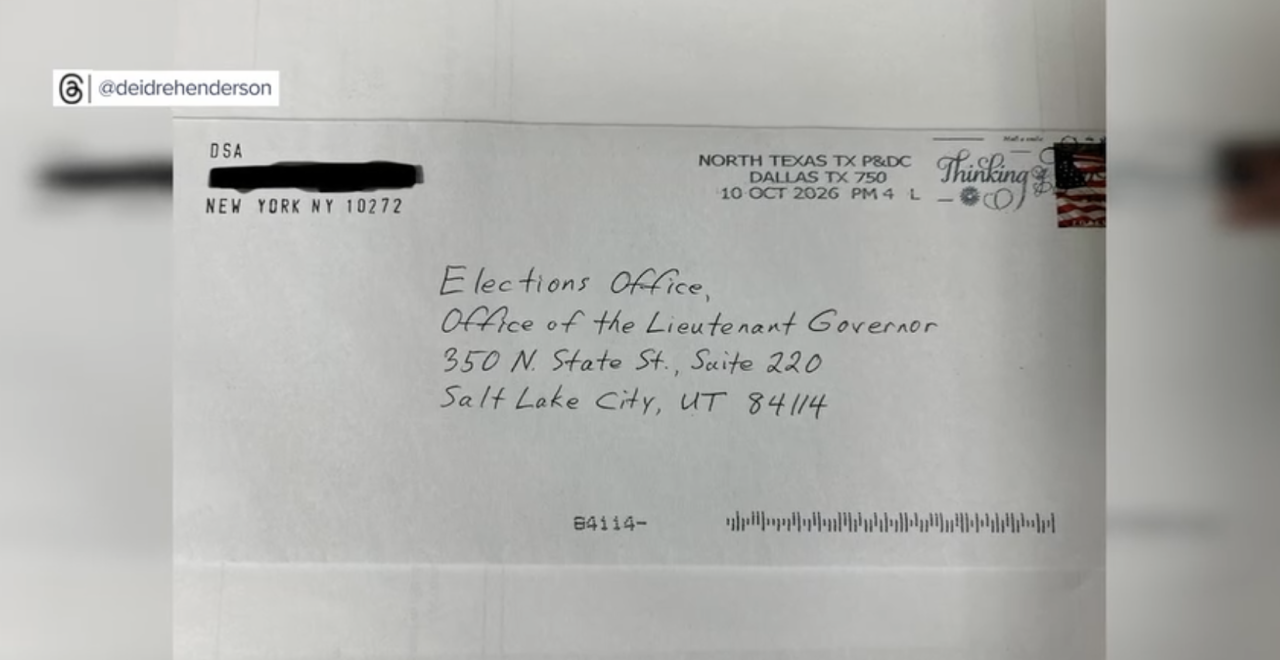
Henderson attached a picture of what the envelope looked like. It appears to have been postmarked at the North Texas Processing and Distribution Center in Dallas. The return address printed on the envelope appears to read "DSA" in New York City, though it's not clear if that's a legitimate return address.
A spokesperson for the Democratic Socialists of America told Newsweek they are not involved with the letters sent around the country and were glad to learn no one was harmed.
A spokesperson for Lt. Gov. Henderson declined FOX 13 News' interview request on Monday.
“Utah has kind of been in the limelight when it comes to some election issues," said former FBI special agent Frank Montoya Jr. "It draws attention to the elected officials here. It draws attention to the electoral process here.”
Montoya referred to previous tension Henderson had with the Department of Justice, after denying their request for information on the state's voter records list.
Damon Cann is a political science professor at Utah State University and said the envelopes bring to mind incidents from the past.
“There was an anthrax scare with mail being posted to several members of Congress in Washington, D.C., containing a white powdered substance," Cann said. "That set of incidents somehow set a sad precedent.”
Whoever sent the letter appears to have handwritten the lieutenant governor's address. Montoya said the envelopes might give investigators some leads.
“Are there any forensic clues on the envelope that it was sent in? DNA, fingerprints, hairs. Is there a postmark that they contract to a point of origin, and is that point of origin near where any of the others came from?” he said.
“This isn't new. There's lots of experience in this regard, but at the same time, it only takes one envelope with a real substance in it to get through the system, and then what do you have? Not just anxiety, but panic," Montoya added.
The FBI released the following statement:
"The FBI and U.S. Postal Inspection Service are investigating a series of suspicious mailings sent to various addresses nationwide, including Secretary of State offices and their related election offices. Some of the letters contained an unknown substance and we are working closely with our law enforcement partners to respond to each incident. We are also working with our partners to identify the individual or individuals responsible for the letters. This FBI and the U.S. Postal Inspection Service will continue to safeguard the public and secure elections for American citizens."