

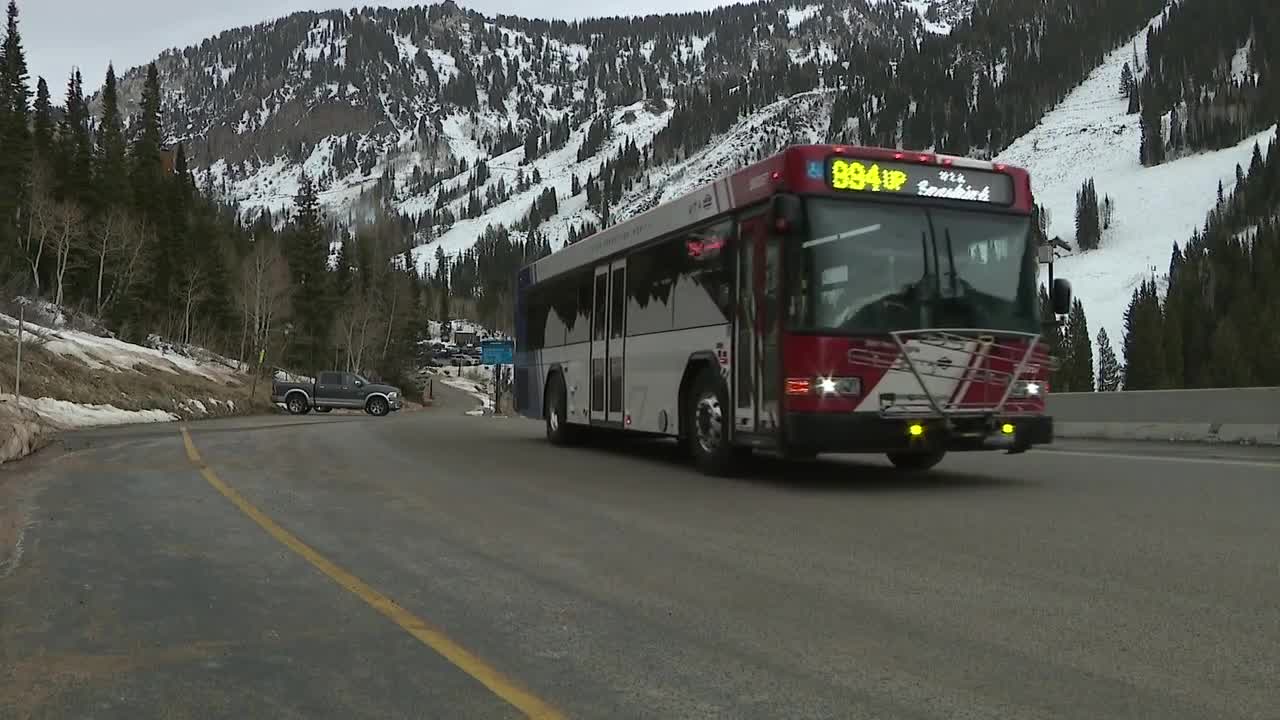


LITTLE COTTONWOOD CANYON, Utah — Every winter, it seems like more people are heading up Little Cottonwood Canyon to enjoy the powder, and the Utah Department of Transportation has taken notice.
“This has been a demand that’s existed for decades, but also in the past 10 years has gotten very, very pronounced,” UDOT project manager Devin Weder said.
UDOT announced Wednesday a plan to build improved bus service and infrastructure over the next two years in the canyon.
Little Cottonwood will benefit from a "mobility hub" being built near the base of Big Cottonwood Canyon — where UDOT recently announced similar initiatives.
UDOT says bus service in LCC will be increasing "significantly" — every 10-20 minutes during peak periods. UDOT says it is planning to build new bus stops at Snowbird and Alta resorts to allow for more riders and to improve the users' experience.
Although the goal of these improvements is to reduce the number of cars on SR-210, people can still drive up and down the canyon. However, UDOT says it is working toward a toll system to reduce traffic congestion — along with eliminating roadside parking during the winter near the popular resorts.
UDOT is still planning long-term to build a gondola in the canyon. Wednesday's announcements are "Phase I" of UDOT's plan to improve Little Cottonwood traffic issues.
Phase II will include avalanche snow sheds, trailhead improvements, and the widening of Wasatch Blvd. from the mouth of Big Cottonwood to the mouth of Little Cottonwood.
Phase III would be a gondola and other base area improvements in the valley.

Local News
UDOT picks gondola and transit option for Little Cottonwood Canyon
These projects are something that the group "Save Our Canyons" has been following closely.
"Less invasive, less massive infrastructure projects are more resilient, more family-friendly, more flexible for the system," said Jack Stauss, the executive director of Save Our Canyons. "We can use the buses and showcases that they work and won’t ultimately need a giant spending project like the gondola.”
Stauss says he likes UDOT’s approach in phase one. He says this type of change won’t just benefit those who love to ski, but everyone across the valley.
“All of us who live in Salt Lake Valley rely on the Wasatch on a healthy landscape and ecosystem because that is our first safeguard against a polluted watershed," he said. "So when we have good infrastructure in place that reduces traffic and pollution, it protects that watershed that feeds hundreds of thousands of people downstream every day.”
Mayor Jenny Wilson applauded UDOT's plan to pursue the increased busing, but reiterated her opposition to a gondola.
“We don’t need to wait decades—or build a gondola—to make real, meaningful improvements in our canyons and I appreciate UDOT’s decision to move forward with Phase I," Wilson wrote in a statement. "The expansion of bus service, creating a mobility hub, and managing demand with practical tools like tolling and parking restrictions are common-sense solutions that I have called for since the early stages of the UDOT process.”