

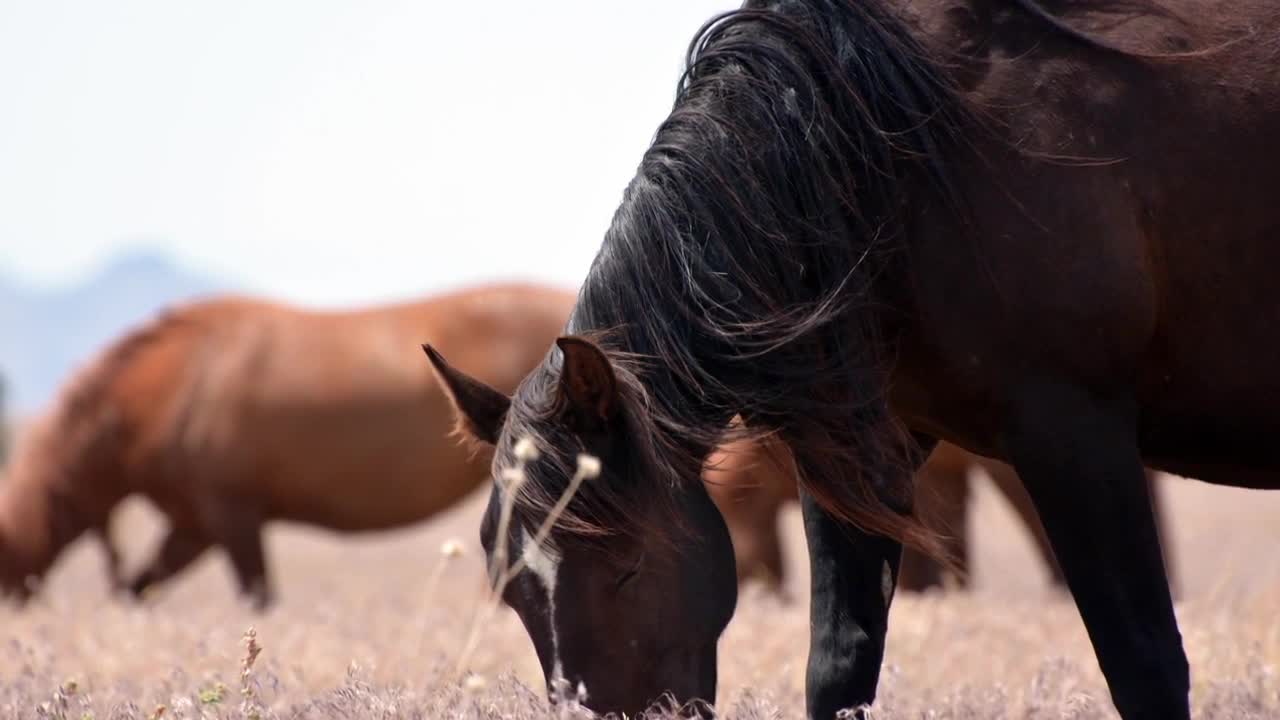


TOOELE COUNTY, Utah — The Bureau of Land Management has begun gathering wild horses in Tooele County, citing concerns about herd population, drought, and the health of the rangeland.
The gather in the Cedar Mountain Herd Management Area is the first for this specific herd in about four years, according to the BLM. The agency said its goal is to maintain a healthy population of wild horses while protecting the land they depend on.
Southern Utah horse deaths, illnesses possibly linked to botulism:
The Cedar Mountain Herd has roamed Utah's mountains since the 1800s. Today, the herd management area is home to approximately 660 wild horses.
However, the BLM's appropriate management level for the area is between 190 and 390 horses.
To bring the population closer to that range, crews use helicopters to guide horses into temporary corrals. The practice has drawn criticism from some wild horse advocates who oppose the use of helicopters during gather operations.
The BLM said pilots take extra precautions, using a pressure-and-release method intended to reduce stress on the animals.
“When numbers get too high, and the forage gets too small and the cover and the space, basically habitat, then these horses can lose body condition, their health can go down, and we can lose them out on the range,” said Chad Hunter, Utah's Wild Horse and Burro Branch Chief. “Mother Nature isn't always nice. We want them to be healthy and happy.”
As drought strains Utah rangelands, concerns remain over future of wild horses:
Once gathered, the horses receive food and water at a temporary holding facility before being transported to another BLM facility, where they are examined by a veterinarian.
The BLM said horses removed from the range will eventually be made available for adoption through their program.
“That's our ultimate goal, is to take care of the horses on the range and make sure they're there forever. And the ones that we remove, we want them to find good homes,” Hunter said. “We love nothing better than to see somebody adopt a horse and see them progress.”
But population management isn't the only concern for those working to protect the Cedar Mountain Herd.
Jan Drake, executive director of Wild Horses of the West, regularly visits the range to help with fertility control treatments and monitor conditions.
Drake said she and other partners want to keep the horses on the range while helping prevent the population from growing beyond what the land can support.
“We are here to help the horses and the rangeland. We want the horses to stay out here. We want them to be healthy, and we want to keep the birth rate down,” Drake said.
Since 2023, the BLM and its partners have conducted more than 100 fertility control treatments using darts.
Drake said prolonged drought has also taken a toll on the range, making it increasingly difficult for wild horses to find the vegetation they need.
“I'm used to being on the range, and you'd have grasses this tall, but in the past 10 years that has degraded down and the conditions are tough,” Drake said.
Hunter said many of the horses are thinner than officials would like to see because of the current conditions.
He believes gathers, along with fertility control efforts, are important tools in keeping the herd healthy for years to come.
Hunter, who has worked with wild horses and burros for more than 50 years, said he hopes future generations will continue to have the opportunity to see these animals roaming Utah's public lands.
“The whole point is that we continue to manage these horses and they're here for generations to come,” Hunter said.
Advocates concerns remain over future of wild horses
Back in August, we spoke to wild horse advocates in Utah after an investigation from the New York Times reported finding horses bearing government brands among a shipment sent to Canada by a man identified as one of the country's largest exporters of slaughter horses. The report focused on what it described as a loophole in the adoption and sales process that could allow buyers to indirectly sell federally protected horses to slaughter channels.
The investigation did not implicate anyone in Utah.
Utah has nearly 5,000 wild horses and burros roaming public rangelands. The Bureau of Land Management oversees 19 herd management areas across approximately 2.5 million acres in the state. The appropriate management level for Utah is 1,956 animals.
FOX 13 also spoke with horse advocates and experts about the challenges of managing wild horse populations.
At Liberty Sanctuary in Heber, founder Debra West said concerns about the treatment of wild horses motivated her to dedicate her work to rescuing and protecting them.
West previously told FOX 13 News that she believes officials need to take another look at the science behind herd management levels and how many horses the land can realistically support.