



MURRAY, Utah — What should be the height of spring runoff is telling a very different story along the Jordan River — and it’s a concern that first came to light thanks to a local viewer.
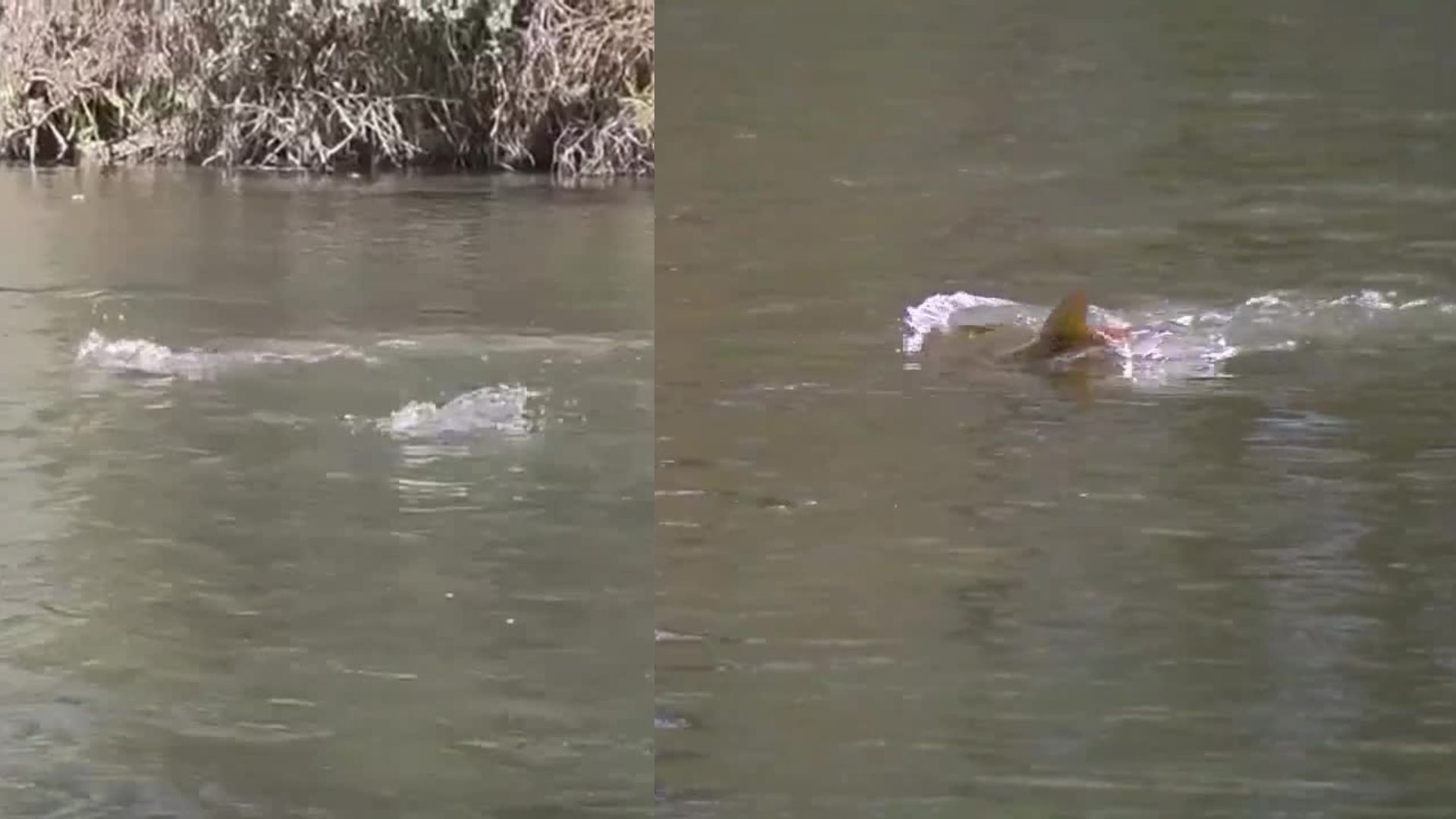
After noticing something unusual, Murray resident Chelsea LaRoe reached out to FOX 13 News, sharing video of fish struggling in shallow water along the river. In some areas, water levels have dropped so low that parts of the river are only a few inches deep, creating challenges for fish trying to survive.
“I was walking the trail today and I just kind of heard this 'flip-flop' noise in the water,” LaRoe said. “I looked over and noticed all the fish flopping around in the water… and I realized the water levels were very low.”
LaRoe says the shallow conditions are striking and concerning.
“You could probably walk to the middle of that and be less than knee-deep high in the Jordan River,” she said. “To have our waters down to nothing… it’s very frightening for Utah.”
After hearing from LaRoe, FOX 13 took a closer look at conditions along the river and found that the issue goes far beyond a single stretch. Hydrologists say low flows are being seen across much of the state.
“It’s a direct feedback loop from our record low snowpack that we saw this winter,” said Glen Merrill, a hydrologist with the National Weather Service.
Merrill says the lack of snow has already had a major impact on runoff timing.
“Many [rivers] have already been through their peak flows about a month to a month and a half early,” he said.
WATCH: Why are dead fish turning up in the Jordan River? (Aug. 2025)
With less water moving through rivers and streams, fish are being forced into smaller, more crowded spaces — adding stress to already difficult conditions.
“There’s going to be lesser flows in streams… less area in the stream… same number of fish, less space for each of them,” said Trina Hedrick, Cold Water Sport Fish Coordinator with the Utah Division of Wildlife Resources.
As temperatures rise, the situation can become even more dangerous.
“As the water warms, it’s holding less oxygen as well,” Hedrick said.
Wildlife officials say that combination — low water, warmer temperatures, and reduced oxygen — can make it much harder for fish, especially cold-water species like trout, to survive. They’re encouraging anglers to take extra precautions, including fishing during cooler parts of the day and minimizing how much fish are handled before being released.
“If you are going to catch and release, don’t even take it out of the water,” Hedrick said. “The less you can handle a fish, the better.”
Experts also stress the importance of conserving water at home, noting that many of Utah’s rivers and reservoirs serve as key water sources for communities.
“The less we use in our homes, the more stays in those water bodies,” Hedrick said.
With streamflows already running well below normal, and little relief in sight, conditions like those seen on the Jordan River will likely continue, or worsen, in the coming months.