

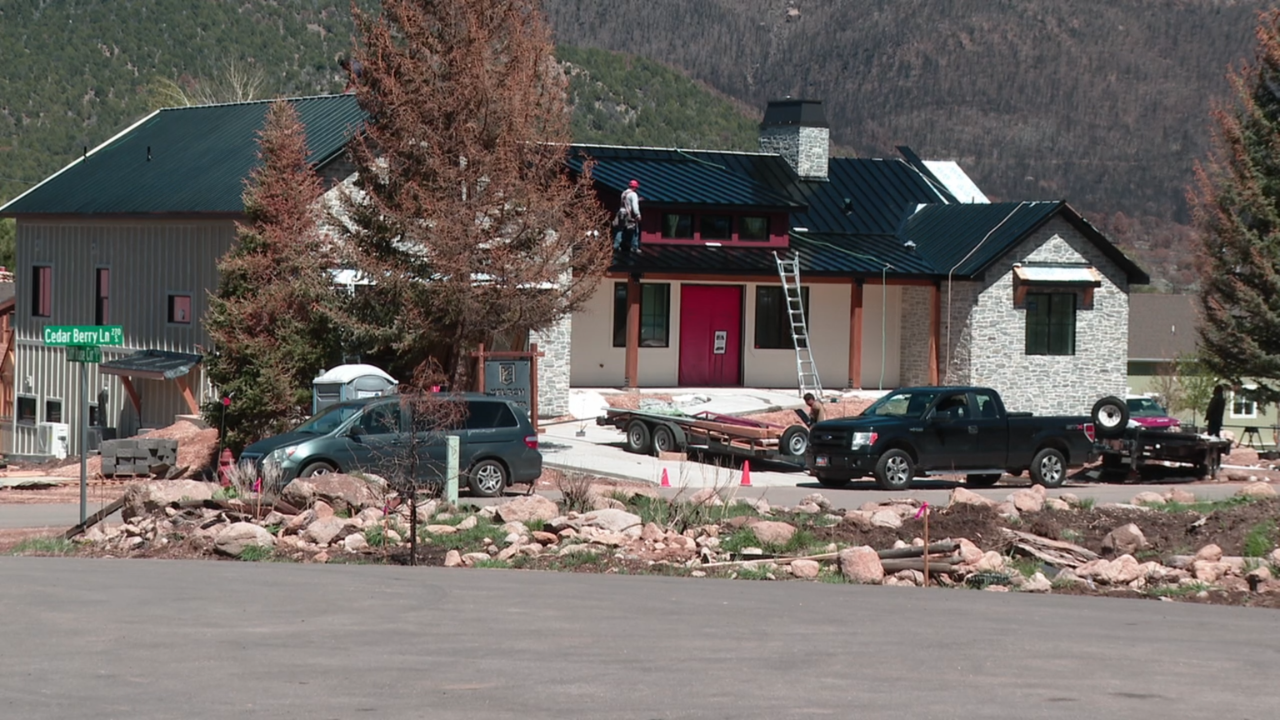


PINE VALLEY, Utah — People might be surprised by how quickly Pine Valley is rebuilding from last summer's Forsyth Fire that burned over 15,000 acres, but now people are asking whether those living in high-risk wildfire areas should pay an extra tax.
"It's absolutely insane," said Pine Valley resident Keith Kelsch. "Because you're paying a tax that has no return benefit."
In 2025, the Utah Legislature passed a bill that charges homeowners who live in designated high-risk wildfire areas a fee that would fund assessments of their lots. The return benefit, according to the law, is that each county would use those assessments to let homeowners know how they could reduce their risk. That might help them reduce their risk score and fee, and, they say, maybe give them more favorable treatment by insurance companies.
Kelsch’s home was one of the few that survived on his Pine Valley block thanks to fireproofing methods on the home he built. Now, he’s helping other neighbors rebuild with the same methods, and they’re doing it quickly; a lot quicker, Kelsch says, than it would be if they relied on decisions from Capitol Hill in Salt Lake City.
Builder whose Pine Valley home survived 100-foot flames in Forsyth Fire says he built luck:
"It's what people do far, far away. They don't have any experience on anything. We could be innovative in our state alone without trying to fit with what other states are doing," Kelsch said.
But Kelsch and other homeowners just got a reprieve.
In the most recent legislative session last month, a bill was passed and signed by Gov. Spencer Cox to delay the fee plan until January.
The state has received complaints that areas were being judged based on points on a map, rather than realities on the ground. The bill’s co-sponsor, Rep. Jason Kyle (R-Huntsville), said the extra year gives more time to adjust which properties should actually fall inside the fee area.
"We did move back the bill adoption date to January 1 to give cities and counties time to make those decisions," Kyle explained.
But Kelsch believes the fee should go away entirely, adding that communities can take measures on their own without Capitol Hill. He notes how the state-run Pine Valley Recreation Area will remain closed through the end of the year for rebuilding, while there are homes that were destroyed now nearly rebuilt.
"Look how fast individual owners are coming back and rebuilding," Kelsch said. "And yet we're supposed to hear it's gonna take two, three, maybe four years to rebuild all that park?"