



WASHINGTON — In testimony before the U.S. Senate Energy and Natural Resources Committee, the head of the Colorado River Authority of Utah urged Congress to block funding to states that sue other states over the water.
"Dollars should go to real on-the-ground solutions that move the needle on supply, not to enrich lawyers," said Amy Haas, the authority's executive director. "Compact litigation on the Colorado River will be unprecedented, will involve all seven basin states, and will be orders of magnitude larger than any interstate water case ever brought. It will potentially take multiple decades to resolve."
Haas called for a "legal detente" now, as states continue to negotiate new agreements over the river that supplies water to more than 40 million people across the American West. She told the committee that federal dollars should be spent to shore up infrastructure to make it more drought resilient, but shouldn't be used for lawsuits.
"We urge Congress to send a clear signal states that choose courtrooms over cooperation should not expect Washington to bankroll it," Haas said.
The agreements between California, Nevada, Arizona, Utah, New Mexico, Colorado and Wyoming governing the Colorado River expire in October. But so far, the states have been unable to come up with a consensus deal. The states basically remain divided over who gets what out of a river that has less water in it than demand for it.
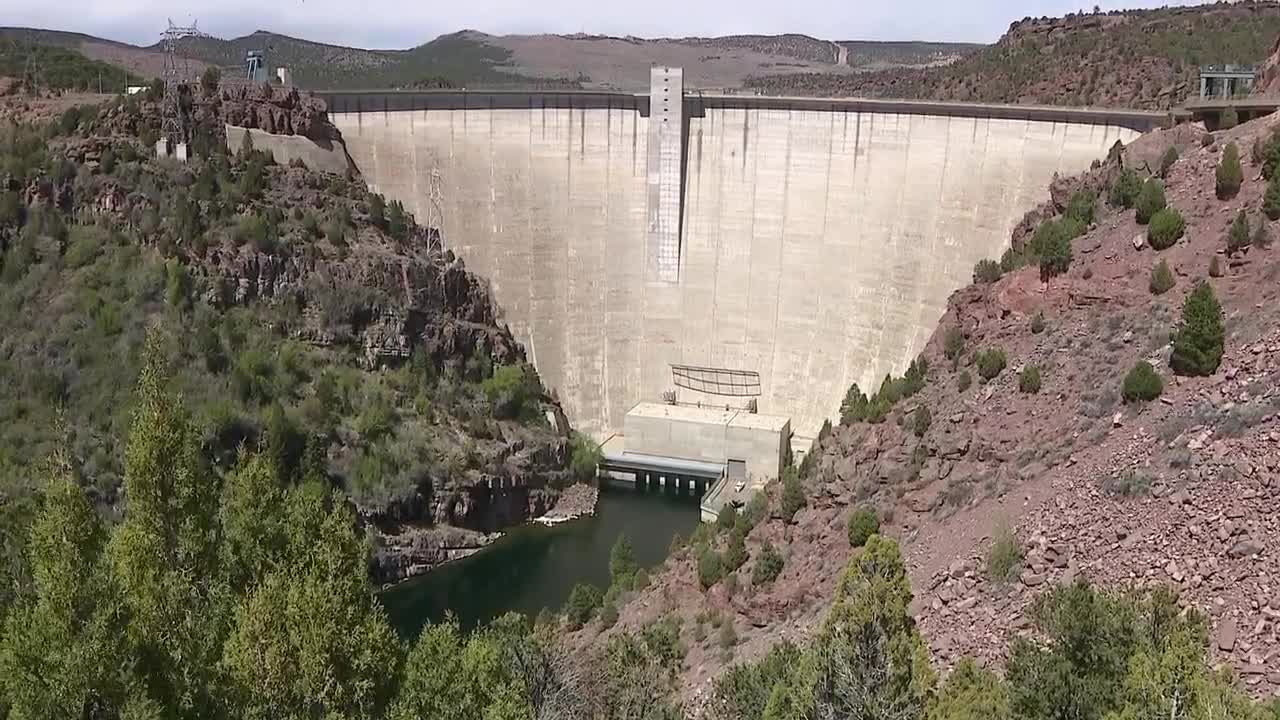
The U.S. Bureau of Reclamation has ordered the release of up to a million acre feet of water from Flaming Gorge to prop up Lake Powell and keep it generating electricity. As FOX 13 News reported last week, a new report warns that with continued drought, the entire Colorado River system is headed toward a "crash."
The U.S. Department of Interior is moving ahead with its own plans, including offering states a new agreement that is getting mixed reaction. Meanwhile, some states appear to be spiraling toward litigation. Arizona has retained a law firm and Utah's legislature began socking away money in a legal fund, just in case.
On Tuesday, Wyoming Governor Mark Gordon and Utah Governor Spencer Cox met with senators in Washington D.C. to discuss river issues.
"We came to Washington D.C. to have serious conversations about the future of the Colorado River Basin, and those conversations were productive," Gov. Gordon said in a statement. "Wyoming is committed to bringing forward ideas, and leading the search for practical solutions that recognize both the realities of drought and the needs of the West."
But even senators who represent those states are a little frustrated no deal can be reached.
"Congress gave the states room to negotiate. The Department gave the states room to negotiate. When the states asked for more time, they received it, but deadline after deadline has passed," Utah Sen. Mike Lee, who chairs the Energy and Natural Resources Committee, said during Wednesday's hearing.
Sen. Lee called out some states for their rhetoric, saying it was "unhelpful." Andrea Travnicek, the assistant secretary for water and science at the U.S. Department of Interior, said her agency was moving ahead but still hoping for a seven state consensus deal.
"We will continue to have to work with everybody, seven basin states, tribes, and also working with Mexico, and also recognizing the impacts, right? We also get phone calls from landowners, from ranchers, and all the different impacts. So again, any and all ideas we're welcoming it," she told lawmakers.
Bill Hasencamp, the manager of Colorado River water resources for the Metropolitan Water District of Southern California, shared Haas' concerns that litigation won't end well for anyone.
"In discussions with representatives from all seven basin states, Metropolitan believes that a comprehensive, basin-wide plan is attainable. Water users from across the Basin recognize the need to adapt to a drier future, but each has its own way of doing so," he testified.
"Some can produce long-term savings each year, while others can only conserve when supplies are more abundant, so flexibility is key for successful implementation. A long-term agreement for sustainable river operations requires federal funding assistance to support its implementation, which should be paired with local matching dollars to increase effectiveness."
This article is published through the Colorado River Collaborative, a solutions journalism initiative supported by the Janet Quinney Lawson Institute for Land, Water, and Air at Utah State University. See all of our stories about how Utahns are impacted by the Colorado River at greatsaltlakenews.org/coloradoriver
