

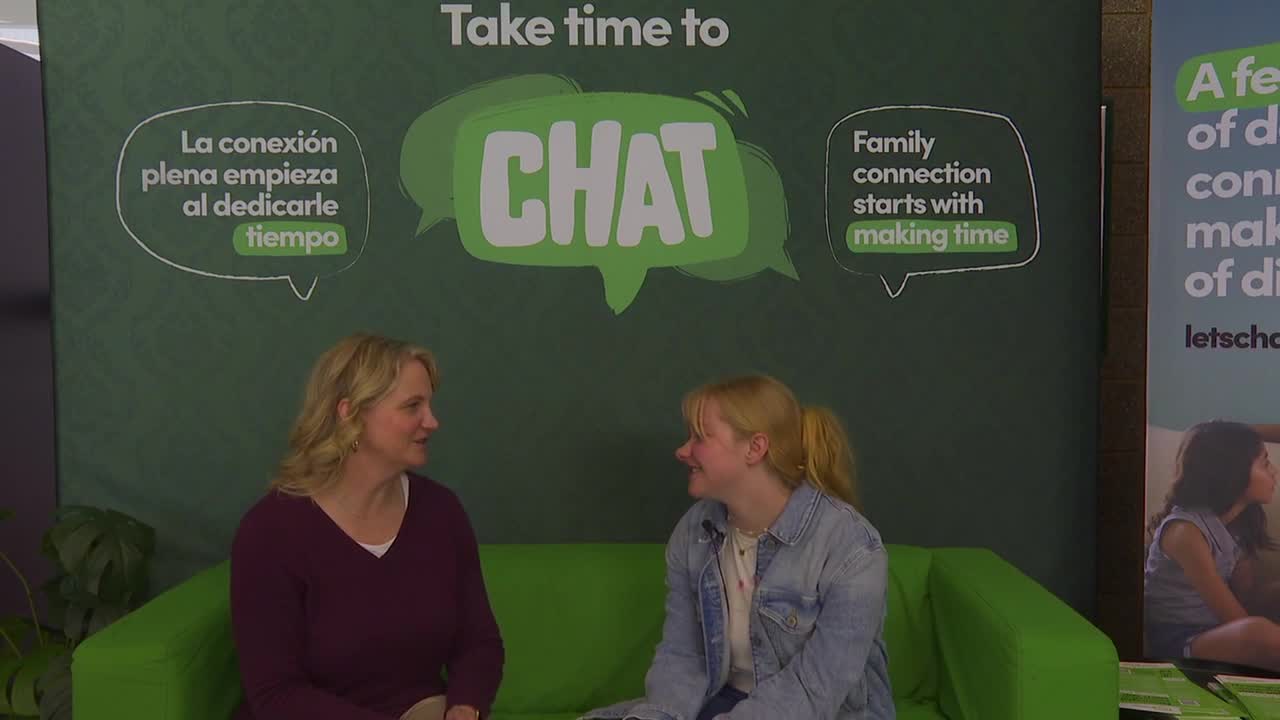


KEARNS, Utah — For some people, a green couch is just a place to sit. But inside Kearns Oquirrh Park Fitness Center, it’s become something more — a spark for conversation between parents and their teens.
That’s the idea behind CHAT, a statewide campaign with the Utah Department of Health and Human Services encouraging parents and teens to talk openly, build trust, and strengthen the kind of relationships that lead to healthier futures.
Amee Rock and her 14-year-old daughter, Megan, were among those taking part in the campaign. On Tuesday, the two sat down on the bright green couch to talk about school, friends, and their upcoming family game night.
“Hey, you said you weren’t very good at giving compliments,” Amee told her daughter with a smile. “I think you’re actually pretty good.”
“I’m a huge yapper,” Megan said through a laugh. “It’s just nice being able to get things off my chest and know you don’t judge me.”
That kind of connection isn’t as common as parents might think. According to Utah’s 2025 SHARP Survey, 93 percent of parents believe their kids feel comfortable sharing their feelings. But nearly 40 percent of distressed teens told no one. Of those who did reach out, only 41 percent went to a parent.
Nathan Malan, an epidemiologist with the Utah Department of Health and Human Services, says that gap shows why efforts like CHAT matter. “Sometimes as adults we think, ‘That’s not anything,’” he said. “But for kids, it can be the hardest thing they’ve ever faced. They need people to talk to about their struggles, about their emotions.”
Malan added that small, intentional moments, such as family meals or one-on-one activities, can go a long way toward helping teens feel heard.
For Amee and Megan, that starts with one simple question at dinner: What was the best part of your day?
“Megan suggested that. It just flipped the tone,” Amee said. “Instead of focusing on what went wrong, we started thinking about at least one good thing.”
And for Megan, she says empathy makes the biggest difference. “No one’s perfect,” she explained. “Parents are trying their best. Sometimes you just have to be patient and understand that.”