



As his discharge date approached, a resident at one of Utah’s long-term care facilities had nowhere to go.
The man had no home and no family, so he tried to list his next destination on paperwork as a friend’s home more than two hours away. But the friend said he couldn't provide the care the man needed.
“When the day of discharge came, they escorted him outside — without his walker — and said, ‘Do you want me to call you an Uber? That will cost about $500,’” Alianne Sipes, Utah’s Long-Term Care Ombudsman, recounted in a recent interview with FOX 13 News. “And the resident said, ‘No, I’ll hitchhike.’ And so the facility staff said, ‘OK’ and left, and he hitchhiked to his friend’s house.”
The man ultimately ended up in a homeless shelter.
Nursing homes are supposed to find a safe destination for residents discharging out of their care. But the Utah Long-Term Care Ombudsman’s Office has noticed an increasing number of older adults discharged out of these facilities and into homelessness in recent years — something experts say can lead to poor health outcomes and high hospital readmission rates.

Fox 13 Investigates
Q&A: Utah’s Long-Term Care Ombudsman ready to advocate for you and loved ones
While these discharges can have major consequences for older adults, Sipes described it as a “silent issue.”
“Nobody’s really talking about it,” she added.
To get a better sense of the problem, the office began tracking discharges from long-term care facilities to homelessness in March 2024. Since that time, it found that 57 nursing home residents received a discharge notice with a shelter or hotel listed as their next destination, while 34 others were discharged to “unknown” destinations.
The ombudsman was able to help prevent nine of those discharges, according to data the office shared with FOX 13 News.
While less prevalent, the office has identified similar issues in assisted living facilities. It found five residents were discharged to homelessness in fiscal year 2025, while 12 others went to “unknown" destinations.
Like nursing homes, assisted living facilities “also are supposed to be finding a safe discharge location,” Sipes said. “But it’s unclear whose responsibility it is sometimes to find that.”
The discharges come as many older adults are feeling the pinch of rising costs and shrinking social safety nets — and as this population has become increasingly vulnerable to homelessness.

Fox 13 Investigates
Salt Lake City homeless hospice looking to expand as need for services grows
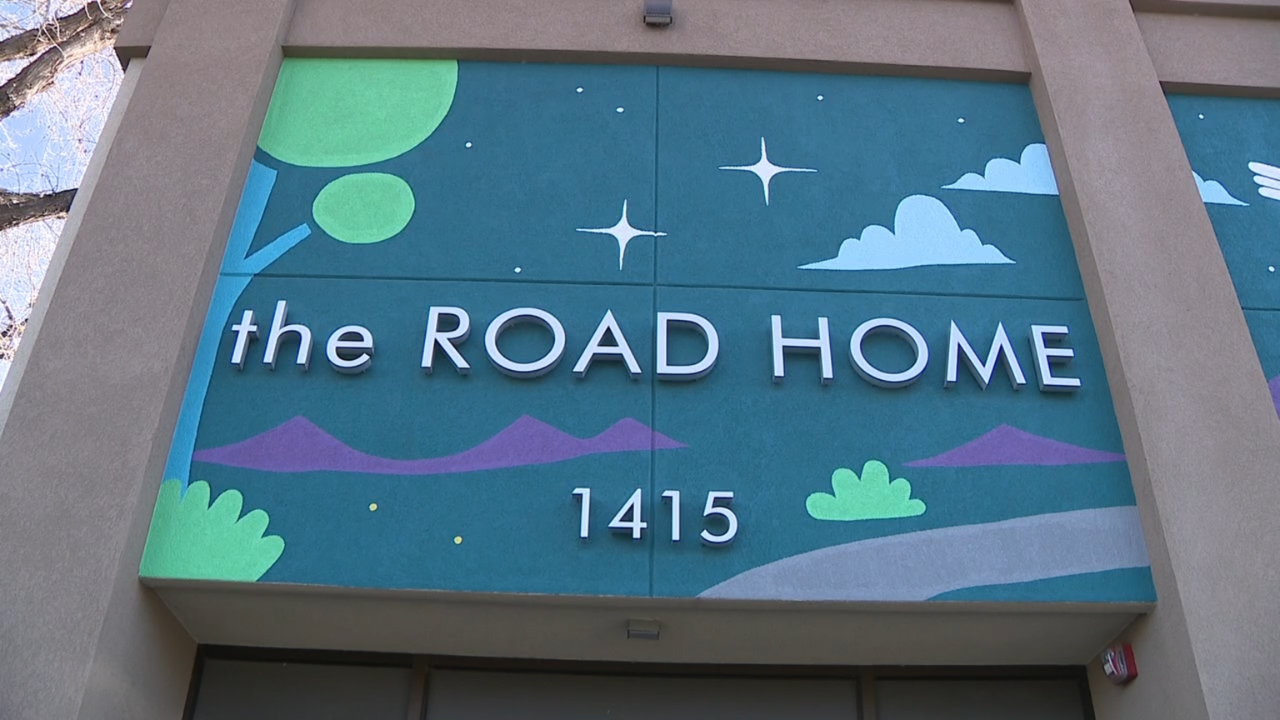
"The need of people who are showing up at our front door is much higher than it used to be,” noted Michelle Flynn, CEO of The Road Home, a homeless services provider that has noticed increased demand among older adults in recent years.
At the same time that Utah’s affordable housing crunch has pushed some older adults into homelessness, it’s also made it harder to find places for them to go after they leave long-term care.
“We see a wide variety of facilities really trying to find solutions — there just isn’t any out there — to facilities who are just really putting them on the sidewalk and saying, ‘The rest is up to you or family,’” Sipes said.
The Utah Health Care Association, which represents the state’s long-term care industry, said providers work with families, case managers and community partners to find good options for residents leaving their care.
Some facilities even keep residents longer than they’re reimbursed for as they search for solutions, noted Allison Spangler, the group’s president and CEO, in an email.
“When a discharge ends up being to a shelter or temporary setting, that’s not something facilities want — it usually reflects bigger challenges we’re seeing in Utah, especially around affordable housing, behavioral health resources, and limited community placements,” she wrote.
Sipes explains the obligations of nursing homes and assisted living facilities to find a “safe discharge location” for residents:
'Back to homelessness'
Shortly after he was discharged from his Salt Lake City nursing home to a hotel, a man with dementia ended up in the emergency room. He’d been found wandering the streets in the rain and knocking on the door of his childhood home, according to a federal inspection of the facility.
At a different nursing home, a resident who was previously homeless did not receive recommended home health services after she was “discharged to the streets,” a report shows.
And when a South Ogden facility discharged a 73-year-old formerly homeless resident — who’d been admitted to the nursing home while she healed from a toe amputation due to frostbite — staff dropped her off at a nearby bus station without a plan for “adequate follow-up care,” regulators wrote.
"They came from homelessness,” Sipes said of the philosophy some facilities have in these types of cases. “Sometimes the default thought is ‘Well, they can just go back to homelessness.’”
Sipes said these issues have become more prevalent as “a lot of nursing homes have been accepting new admissions” from the state’s growing population of homeless older adults.
“Our state is aging and our aging population is growing, and along with that, the number of homeless seniors is growing,” she said.
Data from last year’s Point in Time Count — an annual census of people experiencing homelessness on a single night in January — showed that the population of homeless adults over 64 years old grew 42% across Utah last year, from 251 people to 356.
Flynn, with The Road Home, attributes that trend in part to rising costs for everything from food to housing.
“Many of our older adults have lived stably in the community for many years on their Social Security income or a veteran benefit or something like that,” she said. “And when their rent raises $200 a month, they can no longer afford it.”
Becoming homeless can lead to new health needs or worsen pre-existing ones, said Tyler Riedesel, an epidemiologist with the Utah Department of Health and Human Services who studies health outcomes for unsheltered populations.
This population often has limited access to primary health care and may have trouble safely storing medications, he noted.
“We can think about how and kind of imagine how having a chronic health condition and then experiencing homelessness on top of that would not be beneficial, right?” he said in an interview with FOX 13 News. "Having to live on the streets or in your car or sometimes in a shelter are not the most conducive and healing environments for any sort of illness."
Eventually, an older adult may become sick enough to be admitted to a long-term care facility, where they can “get stabilized,” Sipes said. But “once they’re stabilized, they no longer are eligible for Medicaid,” she added. “And so now they have to discharge."
That's when Utah's affordable housing challenges come back into play, making it difficult to find a place for people to go and leading some facilities to discharge people back to the streets — where they may become even sicker and start the cycle all over again.
'Creative’ solutions
Recognizing the increased demand for services among older adults, The Road Home opened a facility in Sandy after the pandemic with space to serve about 165 people experiencing homelessness who are 62 and older or have medical vulnerabilities.
The center provides transitional housing and case management support to people who are aging or have a medical need that can be difficult to manage in a shelter system — but who aren’t sick enough to be in a long-term care facility or hospice center.
"It definitely fills a niche that we did not have before,” said Flynn, noting that it’s the only program of its kind in the state.
When the center opened, Flynn said The Road Home expected it would receive referrals mostly from emergency homeless shelters serving clients with high needs.
Instead, "we were overwhelmed with referrals from skilled nursing facilities, from senior housing facilities, from hospitals, from all these partners in the community who had people with no place to go,” Flynn said.
The facility filled up immediately, and demand has continued to outpace supply.
As Sipes sees more discharges from long-term care facilities to homelessness, she believes there's a need to expand these types of programs, so those who need additional medical support have a safe place to land.
“That’s the direction we should be going,” she said.
Flynn discusses the high demand for the The Road Home’s Medically Vulnerable People Program:
Flynn believes there's also room for additional collaboration between long-term care facilities, which may not have housing experts on their staff, and Utah’s homeless shelters, which do.
“The more we’re all talking and collaborating and sharing information, the more we’ll be able to help people more quickly get connected with the best place for them to be,” she said.
She envisions a program where homeless service providers could help long-term care facilities begin discharge planning the moment someone starts receiving care.
“Ideally, when people are finished with their stay at a skilled nursing facility, it would be a supportive housing or senior housing that they would move into,” she said.
The Utah Health Care Association also identified the need for increased collaboration moving forward, noting that solutions will take “coordination across healthcare, housing, and social services."
Riedesel, with DHHS, argues that it’s also important to focus on preventing older adults from becoming homeless in the first place.
"If we look a little bit more upstream before they even came to the nursing home,” he said, “what are areas we could work on there?”
As Utah’s population ages, he said discharges to homelessness pose important questions for the community to grapple with — and ones he believes “we are creative enough to come up to solutions” for.
“I think that as a society we should be asking ourselves these questions,” he said. “Is that something that people are comfortable with? Is that something we would want our grandmother, our grandfather, ourselves, do we want that own experience to happen? And I would venture to say that most people would say not.”
Read more from FOX 13’s ongoing coverage of Utah’s elder care systems here:
- 'More psych than we can handle': Utah nursing homes struggle to address residents' mental health needs
- ‘It should never happen’: Vulnerable adults sexually assaulted inside Utah nursing homes
- Why FOX 13 News is reporting in-depth on gaps in Utah’s elder care systems
- Consensual sex between residents, employees in long-term care raises concerns
- Q&A: Utah’s Long-Term Care Ombudsman is ready to advocate for you and your loved ones
- Utah’s Adult Protective Services is substantiating few cases of elder abuse
- What you should know before choosing a nursing home
- Older adults are wandering away from Utah care facilities, sometimes with tragic outcomes
- Critics say taxpayer dollars for nursing homes should be spent on care, not new buildings
- Nursing homes receiving millions in extra taxpayer funds face allegations of poor patient care